How many famous astronomers can you name? Probably a dozen or more, and it's likely that more than a few of those great stargazers are still living.
But how many amateur astronomy discoveries do you know?
People have gazed at the stars, and told stories about their meaning and significance since the dawn of time. There is evidence that myths about the ‘seven sisters’ stars could be the world’s oldest story, going back 100,000 years.
Human beings have been astronomers far longer than they’ve been professional astronomers. Join us as we look at some amateur astronomers and their discoveries.

Chris Stockdale watches the stars for the smallest changes.
Stockdale has jointly authored over 100 planet discovery papers, helping researchers discover an ultra-hot Neptune, four super Jupiters, and several potentially Earth-like planets, all orbiting distant stars.
From his Gippsland backyard, on the traditional lands of the Kurnai people, Stockdale helps look for potential exoplanets in images taken by NASA’s Transiting Exoplanet Survey Satellite (TESS). Though he’s an amateur astronomer, Stockdale estimates his backyard astronomy setup is worth around $100,000.
The Astronomical Society of Australia awarded Chris the 2026 Page Medal for excellence in amateur astronomy in Australia and its territories.

Maria Mitchell (1818-1889) is often called ‘the first American professional female astronomer.’ She makes this list of amateur astronomers because her major discovery was made while she was working as a librarian.
On the night of October 1, 1847, Mitchell noticed an unknown object moving through the sky. A keen amateur astronomer, she knew she hadn’t noticed any activity in the same area previously, and correctly recognised it was a comet.
Mitchell published her observations of Comet 1847 VI (modern designation C/1847 T1), following up with her calculations of its orbit, ensuring her claim as the comet’s original discoverer.
Miss Mitchell’s Comet (as it became known) made Mitchell a celebrity, earning her an appointment as professor of astronomy at Vassar College and as director of the college’s Observatory.

Since 1957, amateur astronomer John E. Bortle has logged thousands of observations of more than 300 individual comets.
Among his greatest comet observations are Comet Ikeya–Seki, one of the brightest comets seen in the last thousand years, and Comet IRAS-Araki-Alcock, which (at the the time) made the closest approach of any comet in the last 200 years.
As well as writing Sky and Telescope magazine’s monthly Comet Digest from 1977 until 1994, Bortle penned The Bright-Comet Chronicles, a comprehensive list of comets between the years 1800 and 2000 that reached an observed maximum brightness of magnitude 0 or brighter.
If Bortle’s name sounds familiar, he also created the Bortle scale, which quantifies the darkness of the night sky.

Marua Tombelli is sometimes called the world’s leading amateur female astronomer.
Tombelli walked into the Florence Astrophysical Observatory one day in 1988, and asked its then-director whether she could do something useful with her telescope. Tombelli has since discovered almost 200 minor planets.
Tombelli helped discover Near-Earth Object 15817 Lucianotesi (the first NEO found from Italy) in 1994. The potentially hazardous near-Earth asteroid’s discovery motivated Tombelli to start a multi-year survey of minor planets at Asiago Astrophysical Observatory with two professional Italian astronomers.
In 2003, Tombelli founded the Beppe Forti Observatory, named after her mentor Giuseppe Forti, who had first set her to work hunting comets. The observatory opened its doors in 2018.

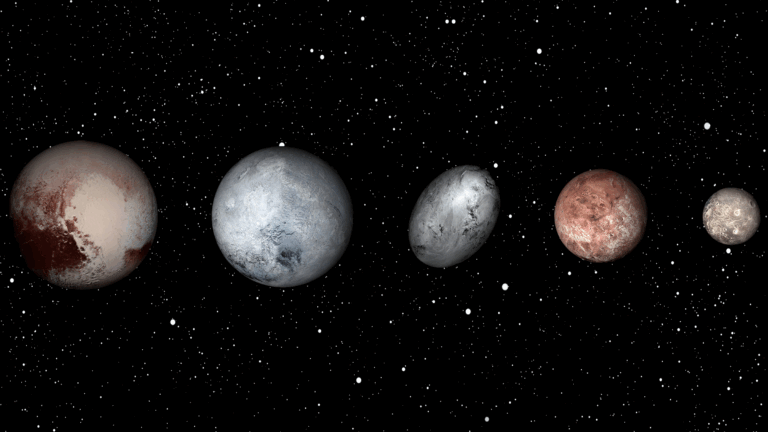
Amateur astronomers Jonathan Bradshaw, Renato Langersek and John Broughton received the Astronomical Society of Australia’s Page Medal for finding something that shouldn’t exist.
The three Queensland backyard astronomers were individually watching an occultation (eclipse) of the dwarf planet Quaoar when they saw something strange. Bradshaw describes it as “a blip”, like a blink of light.
The men compared data, and the blip across all three. What they’d found were rings around the dwarf planet, like Saturn. The peculiar thing is that the ring system is rotating roughly 4,000km above the planet’s surface: twice the distance they should be.
The Roche limit determines whether loose material in space, like dust and rocks, forms rings or clumps together to form a Moon. This means Quaoar’s rings should be impossible. Astronomers continue to research the puzzling dwarf planet.

Reiki Kushida used a 40-centimetre reflector telescope to discover one of the most important supernovae astronomers have ever studied.
In December 1991, amateur astronomer Reiki Kushida (with assistance from her husband, Yoshio Kushida) spent weeks scanning the Messier 84 galaxy for supernovae. On the night of December 9, Kushida recorded supernova SN 1991bg at magnitude 14.5. That’s about 250 times fainter than the faintest star seen with the naked eye under perfect dark skies.
Type Ia supernovae are generally so consistent that astronomers use them as standard candles to measure distances in space. Kushida’s discovery, observed through the telescope’s eyepiece, was dramatically dimmer, colder, and less energetic than expected.
This has prompted astronomers to rethink Type Ia supernova, and create the 1991bg-like SNe Ia supernovae subclass, for peculiar, subluminous, and fast-declining Type Ia supernovae.

Jay Chesters
Take your stargazing to the next level
Keen to get more from your telescope? Click the button for more info on our telescope & astronomy classes where everyone is welcome.