What is a constellation, how many constellations are there, and how are constellations different to the zodiac?

What is a constellation?
In the simplest of terms, constellations are groups of stars that look close together in the night sky, forming recognisable shapes and patterns.
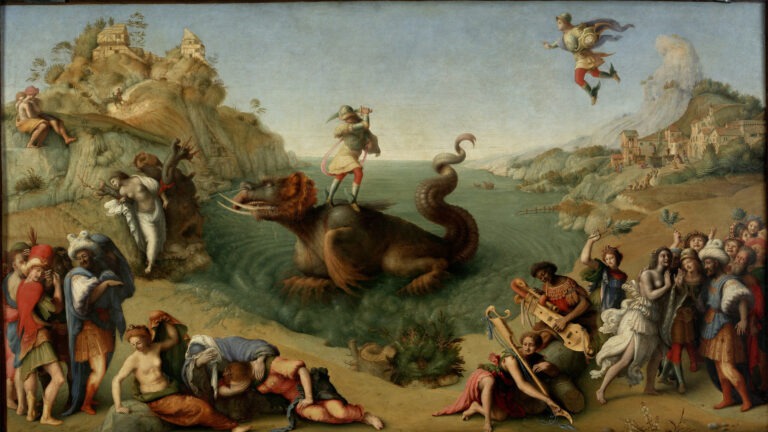
Some of the most famous constellation names come from Greek mythology, such as Scorpius and Orion. Other constellations are less lyrical, like Mensa, which is named after South Africa’s Table Mountain.
Despite the great distances involved, astronomer and author Ray Norris says, “There are many stories about the Orion constellation right across Australia, and they are nearly always about a group of men hunting or fishing.”
We love that many cultures worldwide share similar stories, myths, and legends attached to the constellations. This suggests the first human migration out of Africa may have carried stories of the stars with them.

What's the difference between constellations and the zodiac?
Not everyone realises that the traditional zodiac’s twelve constellations are ‘real’ constellations.
The Sun follows a predictable path through a belt-shaped region of the sky over the course of a year. Astronomers call this the ecliptic.
Recognising the Sun’s path, early Babylonian astronomers divided the sky into 12 equal segments, one for each month. This gives us the traditional zodiac with its 12 signs. To make the numbers work, the Babylonians excluded the 13th constellation that the Sun moves through.
The name ‘zodiac’ comes from the Ancient Greek word for “little animals,” which are the most common constellation shapes.
While the various dates of the 12 zodiac signs each refer to the Sun’s position in their constellations, the dates don’t neatly match today. This is because Earth’s rotation on its axis gradually changes over thousands of years, and the dates relate to positions from over 2,000 years ago.

Are there different Northern and Southern constellations?
Some of the Northern Hemisphere’s constellations are too far north for us to see from Australia, and those that we can see appear ‘upside down’ to us, so their familiar shapes are often less recognisable.
Take Orion, for example; the hunter makes a lot more sense when he’s not upside down.
Because everything is moving, the stars in the constellations are getting farther apart, and in a few thousand years their shapes will be unrecognisable.
Even though you can’t see all 88 of the IAU’s constellations from Australia, we do have 32 constellations that are largely limited to the Southern Hemisphere.
What are the best constellations in the Southern Hemisphere?
★ Crux: The smallest of all 88 constellations, it’s easy to see and known for its four main stars, which make up the Southern Cross. Crux is a great target for binocular viewing; it contains the Jewel Box (NGC 4755) star cluster and is beside the dark Coalsack Nebula. When is the best time to view Crux? We recommend finding Crux on moonless nights from April to September. However, the constellation is circumpolar, meaning it’s never below the horizon (when viewed from Australia and New Zealand).
★ Puppis: also known as the stern or the Poop Deck, Puppis was once part of the former Argo Navis constellation. Among its notable features is the star cluster M47, which is visible to the naked eye. When is the best time to view Puppis? You’ll find Puppis almost directly overhead around 9pm in late February and March.
★ Scorpius: better known as Scorpio, or the Scorpion, Scorpius is home to Antares, a red supergiant star and one of the largest visible to the naked eye. When is the best time to view Scorpius? Lurking near the centre of the Milky Way, Scorpius is between Libra and Sagittarius. Scorpius is best seen in late Spring and Winter; you’ll find it rising in the East after sunset.
★ The Southern Birds: We admit it, this one’s a bit of a cheat because it’s not one constellation, but several. We think Pavo (the peacock), Phoenix (the phoenix), Grus (the crane) and Tucana (the tucan) are all great viewing. When is the best time to view the Southern bird constellations? These Southern bird constellations are seen flying high close together in the south-eastern sky during September.
★ Ophiuchus: The forgotten 13th sign of the Zodiac, Ophiuchus hosts the Butterfly Nebula (also known as M2-9) and several globular star clusters for binocular, or telescope, viewing. When is the best time to view the Ophiuchus constellation? Ophiuchus is a large but faint constellation. We find the best time to view it is around midnight during winter, from June to August, when it’s high in the sky above the Milky Way.

Jay Chesters
Jay Chesters is an award-winning wordsmith and science communicator with a little bit of a thing for the stars.
A cosmic storyteller with a love for astronomy and space that's out of this world, Jay’s always eager to share his knowledge and passions.
join our friendly stargazing community
Stargazers Club WA is here to help you discover stargazing and astronomy in a supportive group environment.