There’s not a single, agreed-upon definition for what a supermoon is.
Different websites, news outlets, or social media influencers disagree on what makes a full moon into a supermoon, because supermoon isn’t a scientific term. The name was invented by an astrologer who thought that moons caused natural disasters.
In popular science, the simplest definition of a supermoon is like this: the Moon’s orbit around Earth is slightly oval-shaped, or elliptical.
This means that, every month, at one time the Moon is at its closest point to Earth (its perigee) and another time when it’s at its farthest from Earth (its apogee). A supermoon is when a full moon coincides with the Moon being close to its perigee.
How rare is a supermoon?
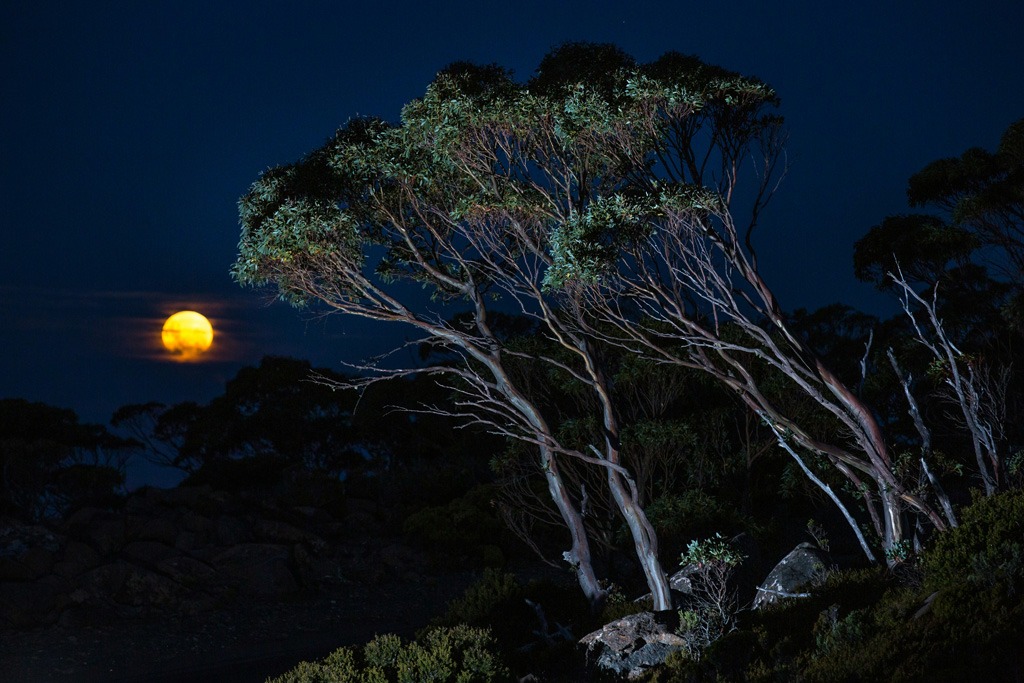
Out of a possible 12 or 13 full moons in any given year, there are often three or more times when the full moon happens to be near to when the Moon is at its closest point to Earth.
The American astrophysicist Fred Espenak developed a precise mathematical formula to help you check if a particular month’s full moon is a supermoon. Saving you the mental labour of working it out, he also published a table listing every supermoon until the year 2100.
Check it out on Espenak’s website, at Full Moon at Perigee (Full Supermoon): 2001 to 2100.
Does a supermoon look bigger?
It has become popular for the media to sensationalize the occurence of each supermoon. Promises are made that a particular Full Moon will be the biggest and brightest of the year “So don’t miss it!”. While such claims may be technically accurate, can you actually see any difference between a supermoon and an “average Moon”? It’s very unlikely, especially since you can’t compare them side-by-side.For some comparisons between ‘Super’ and ‘Micro’ moons, check out our handy infographic below, or read more on Fred Espenak’s website, AstroPixels.


What is a supermoon's effect on Earth?
A supermoon has no specific effect on the Earth.
While the Moon’s mass doesn’t change, whether it’s a full moon or something else, average tidal ranges are slightly larger at times of full or new moon.
Since the Moon’s distance from Earth slightly affects its gravitational pull, a full moon at a particularly close approach to Earth can cause what’s called a “Perigean spring tide”.
However, a supermoon (a full moon coinciding with the Moon being close to its perigee) has the same effect on Earth as if it is a new moon, only you can see it more clearly.
Why does the Moon sometimes look much larger?
Sometimes, the Moon does seem much bigger than normal, and there are a few reasons why this can happen. The simplest is that it’s the power of suggestion.
If we’re told the Moon is going to be the biggest and brightest of the year, we can convince ourselves it’s true.
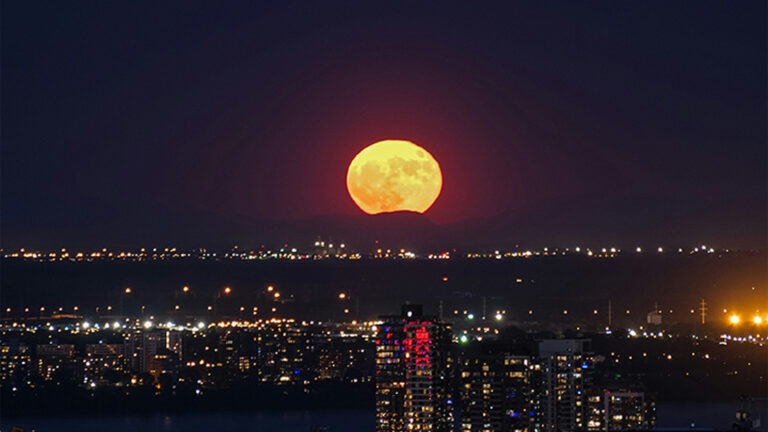
Another reason why the Moon can look larger is that it’s an an optical illusion, known as the Ebbinghaus illusion. When the Moon is closer to the horizon, our brains can misinterpret what we’re seeing. Amazing supermoon photos shared on social media are often photographers accidentally recreating this optical illusion by shooting with a long zoom and capturing objects like buildings or trees in the frame, making the Moon look huge.
You can confirm for yourself the size of the Moon doesn’t change on any particular night, with a simple experiment NASA suggests in their blog post The Moon Illusion: “Hold up your outstretched index finger next to the Moon. You’ll find that your fingernail and the Moon are about the same size.”
Another way that NASA suggests of checking it for yourself is by taking a photograph when the Moon is near the horizon, and taking another later in the evening when the Moon has climbed higher in the sky.
Keep your all camera settings the same for both photos, including your zoom, and you’ll again find that the Moon stays the same.
When and where to look for the supermoon in 2027
While ‘supermoon’ or ‘micromoon’ aren’t astronomical terms scientists use, these occasions are still a great excuse to get us heading outside with binoculars, cameras, and telescopes to gaze up at the night sky.
Here are the dates and rising times for the upcoming supermoons in 2027. Remember, the Moon always rises in the east:
– 22 January 2026, 7:25pm (AWST). Moon distance from Earth: 357,644 km
– 21 February 2027, 7:09pm (AWST). Moon distance from Earth: 363,306 km
Where’s the best place to watch a supermoon rise?
Find a place where you can see the eastern horizon well. Anywhere will be OK as long as you have a reasonably clear view of the eastern horizon, without buildings or trees blocking your view.
If you’d like to try to photograph the supermoon, consider what type of landscape you’d like to capture in the foreground of your image. A group of trees, an interesting building, or perhaps a body of water like a lake or river. Remember, this landscape needs to be in your view as you look east.
What craters can you see on the Moon?
When you observe the Moon, why not take it one step further and identify a feature or two.
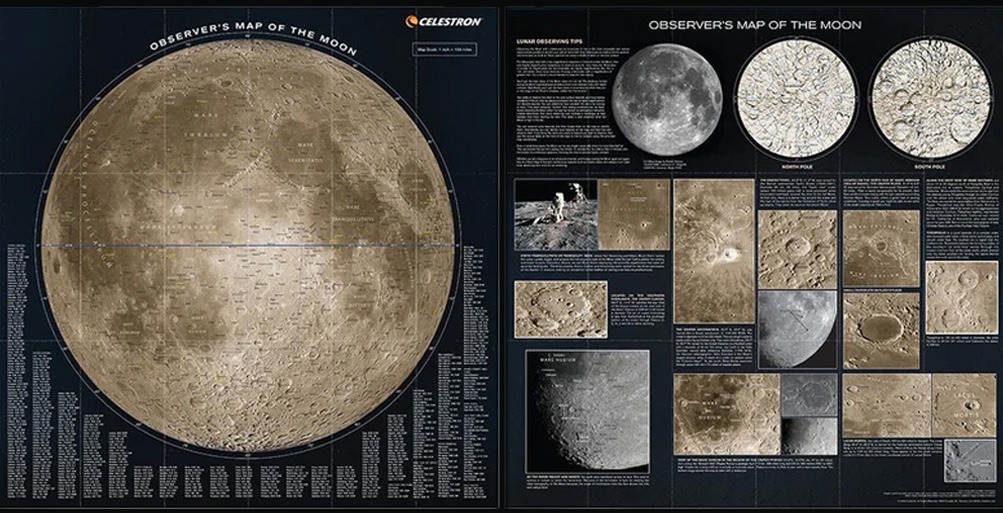
There are some great apps and websites that will help you out, or you can go old school with the Celestron Observer’s Moon Map, that doesn’t need a phone, laptop, or any power when you’re out stargazing.
The two-sided lunar map includes a detailed directory of key Moon regions, and coordinates to help you find what you’re looking for. Before you know it, you’ll be pointing out the Tycho Crater or the Sea of Tranquillity to friends and family.
Try some of these free apps and software:
- Moon Phase and Libration Visualizations (From NASA’s Scientific Visualization Studio. And, yes, the visualisation is for Southern Hemisphere stargazers)
- Moon Globe (for iOS)
- Moon Atlas 3D (for Android)
- LunarMap Lite (for Android)
What makes a supermoon a cold full supermoon or a super wolf blood moon?
Pop culture has taken many lists of what were once seasonal or month names and adopted them as specific names for each month’s full moon.
But even credulously taking these lists at face value, cultural names aren’t astronomical or scientific names, and they only apply to very specific parts of the Northern Hemisphere.
People have been publishing supposed lists of Northern Hemisphere “moon names” for centuries. The earliest published are from 19th-century North America. The Maine Farmers’ Almanac published its list of familiar-sounding moon names in 1937, crediting their labels to “early English ancestors”. By the mid-20th century, authors started generically crediting very similar lists to “the Indians”.
Some contemporary authors may have created their own lists by taking content from sources, like the 1937 almanac, inventing names or adding content found elsewhere, and vaguely citing Anglo-Saxon and Celtic folklore, or modern Pagan, New Age, and Wiccan traditions, often without evidence.
Today, such lists with names like “wolf moon” and “beaver moon” are often reported as coming from “Native Americans”, without specifying the tribe or group they’re meant to come from. The names get super creative when they’re combined with terms like supermoon, blue moon, or blood moon (for a lunar eclipse).
We can call a full moon a super wolf blood moon, strawberry moon, or worm moon, the names aren’t scientific, but they spark interest and curiosity, and we do support encouraging people to get outside and gaze up at the night sky.

Jay Chesters
Jay Chesters is an award-winning wordsmith and science communicator with a little bit of a thing for the stars.
A cosmic storyteller with a love for astronomy and space that's out of this world, Jay’s always eager to share his knowledge and passions.
See the moon
with a stargazers club membership
Gold Galaxy membership gives you entry to all 12 Stargazers Club WA events through the year, and so much more.