

How to identify that strange light in the sky
From sky watchers to stargazers and astronomers, we’ve all sometimes seen lights in the sky we don’t understand or can’t easily identify.
People first reported unidentified flying objects back in the 1940s. With advances in technology, we probably have more possible explanations and likely culprits today.
Come with us on a journey through time and space as we round up some of the usual suspects that may be behind unidentified lights seen in the sky.
Identifying an unmoving, bright 'star'
When you wnjoy stargazing, it’s sometimes surprising that other people might feel alarmed when they see a bright stationary object in the air. Sometimes, people call the emergency services when they see a bright light in the sky that they find strange or worrying. Even police have reported suspicious lights, before realising they’ve misidentified the full Moon.
In 2023, residents of a US town were so worried by two bright lights in the sky they kept calling 911. The sheriff’s office received so many reports that they took to social media, explaining that the sight was a close approach of Jupiter and Venus.
If the bright light you are seeing in the sky isn’t moving and isn’t “twinkling” like a star, it’s likely the Moon or one of the planets. Share Astrotourism WA’s What’s Up in the Sky to help other people you know what they can expect to see in the night sky.
In 1994, the shallow but destructive Northridge earthquake shook awake the people of Los Angeles. Ed Krupp, director of the Griffith Observatory, later said the observatory received many calls asking about “the strange sky they had seen after the earthquake.”
That ‘strange sky’ people were reporting was the night sky, free from artificial light pollution from a power outage, and impossibly full of stars.
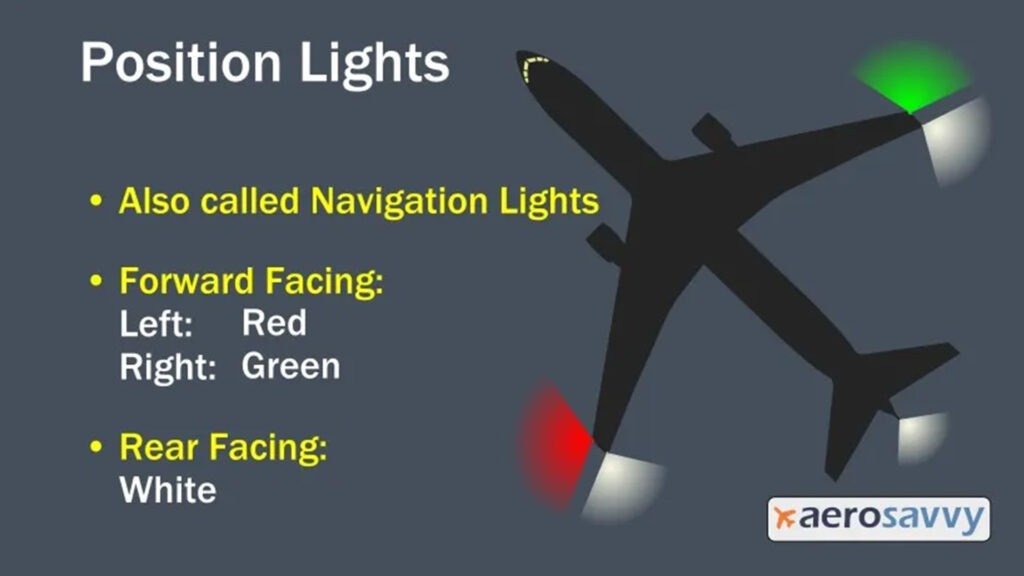
What are the flashing or blinking coloured lights I've seen?
An aeroplane’s lights might flash, blink, or pulse, are usually arranged in a triangular pattern, and can be red/green or white. It’s a fairly domestic explanation, but flashing lights in the sky are usually just planes.
Similarly, many commercial and hobby drones use LEDs in similar colours for similar purposes as planes. However, drone technology has come a long way in recent years, and some can produce more sophisticated light displays.
It can be hard to judge size and distance at night, and a nearby drone can be mistaken for something much larger and further away.
The continuing case of mistaken identity with satellites
In October 1957, the USSR launched Sputnik-1 into Earth’s orbit. Nearly 70 years later, we’ve got around 17,000 operational artificial satellites.
The object most frequently mistaken is the International Space Station (ISS). According to NASA, all sightings occur within a few hours before or after sunrise or sunset. This is your best time to see it, as the Sun reflects off the space station and contrasts against the darker sky.
You can share this ISS Tracker for following the International Space Station.
The USA has been launching NOSS satellites since the 1970s. Naval Ocean Surveillance System satellites locate and track ships at sea, and if you see them in the sky, it’s easy to wonder what they are. They typically appear in groups of two or three, flying in tight formations. That formation means it’s not a plane or the ISS, and it’s not a planet.
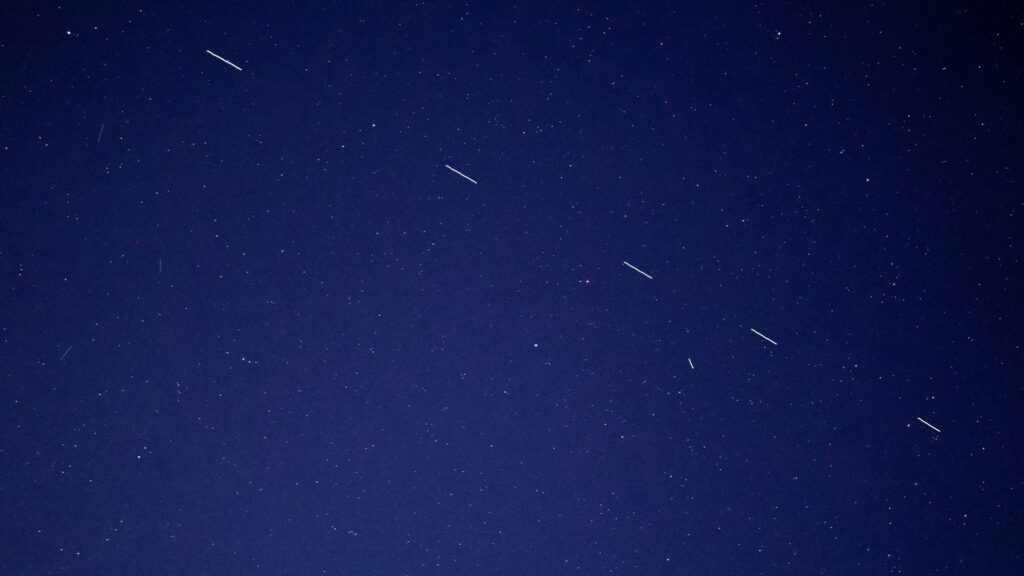
Are mysterious space lights satellite groups?
Satellite groups or trains are increasingly responsible for reports of unidentified lights in the sky. The ABC reports that widely shared “mysterious space lights” are flares of reflected sunlight from satellite groups.
According to public domain resources shared by orbit.ing-now.com, of the 17,000 operational satellites orbiting Earth, over 11,000 are Starlink’s. It says: “SpaceX’s Starlink is the largest satellite constellation ever flown… Unlike a handful of large geostationary satellites, it uses thousands of small spacecraft in low Earth orbit.”
Starlink’s launches form visible strings or trains of satellites in the sky. Freshly launched satellite constellations fly single file along one orbit, before moving to their operational positions.
If you haven’t seen one of these trains before, the strings of lights can seem strange.
In 2023, global management consulting firm McKinsey modelled three potential scenarios around satellite launches. In a high-demand scenario, McKinsey expects to see more than 65,000 satellites in orbit by 2030.
Space junk is probably producing slow-moving fireballs
Satellites don’t only confuse people when they’re active; they also look strange when they burn up in Earth’s atmosphere.
Something resembling a brightly coloured fireball but lasting 30 seconds is probably space debris or space junk. This can be anything from a decommissioned satellite, to spent rocket fuel stages, to dropped tools and thermal blankets.
Check out the objects that are closest to reentry.

Are meteors the fast-moving streaks of light?
Space junk burning up for 30 seconds sounds fast, but meteors can blaze across the sky in the blink of an eye. If you see a fast-moving streak of light, it’s probably a meteor. If that meteor reaches the ground, it’s called a meteorite.
Both are an unusual sight, but a meteor is the glowing, superheated streak of light produced when a space rock plunges through Earth’s atmosphere, and a meteorite is when a solid piece of that meteor survives its fiery atmospheric journey and reaches Earth’s surface.
In May 2025, skywatchers across southwest and central WA saw a bright green-orange fireball fall to Earth. The following November, students from Curtin uni’s Desert Fireball Network found the 300g-meteorite in WA’s Goldfields.
Worried German citizens emailed and called authorities to report “massive fireballs in the skies” in October 2005. The reports coincided with the Taurid meteor shower, which can produce fireballs when you least expect it.
Lists of space rocks also frequently mention comets and asteroids, but unlike meteors, they’re outside our atmosphere. Meteoroids (smaller chunks of asteroid or comet) are also space rocks outside our atmosphere that you might glimpse as they reflect sunlight.
Despite travelling at tremendous speeds, their distance from Earth makes these objects seem barely to move. These more distant space rocks are also quite dim and hard to see without a telescope.
The brightest comet of the 21st century so far is comet McNaught (C/2006 P1), which reached an apparent magnitude of −5.5. On the magnitude scale, where lower numbers are brighter, the full Moon is magnitude -12.6, and Venus can be as bright as -4.9. Comet McNaught was roughly as bright as the ISS at its brightest.
If a comet or an asteroid enters Earth’s atmosphere, it then becomes a meteor. And it’s possible for either of these space rocks to reach Earth as meteorites.
What to do if you see a fireball in the sky
Fill out their interactive form and you could be sharing a potentially scientifically significant event. The IMO also helpfully share what not to report.

Jay Chesters
Jay Chesters is an award-winning wordsmith and science communicator with a little bit of a thing for the stars.
A cosmic storyteller with a love for astronomy and space that's out of this world, Jay’s always eager to share his knowledge and passions.
See 2026's best meteor showers
2026 ends with the year’s most unmissable meteor showers. Read everything you need to know about how and when to see the shooting stars from an Astrotourism Town.


