We talked to astrophysicist Dr Kat Ross (she/they) ahead of International Day of Women and Girls in Science on February 11. Kat “loves twinkly things and misbehaving black holes,” and she’s helping reshape science education in Australia.
Kat also works with the Australian SKA Regional Centre (AusSRC), a joint venture between CSIRO – Australia’s national science agency, Curtin University, the Pawsey Supercomputing Research Centre, and the University of Western Australia.
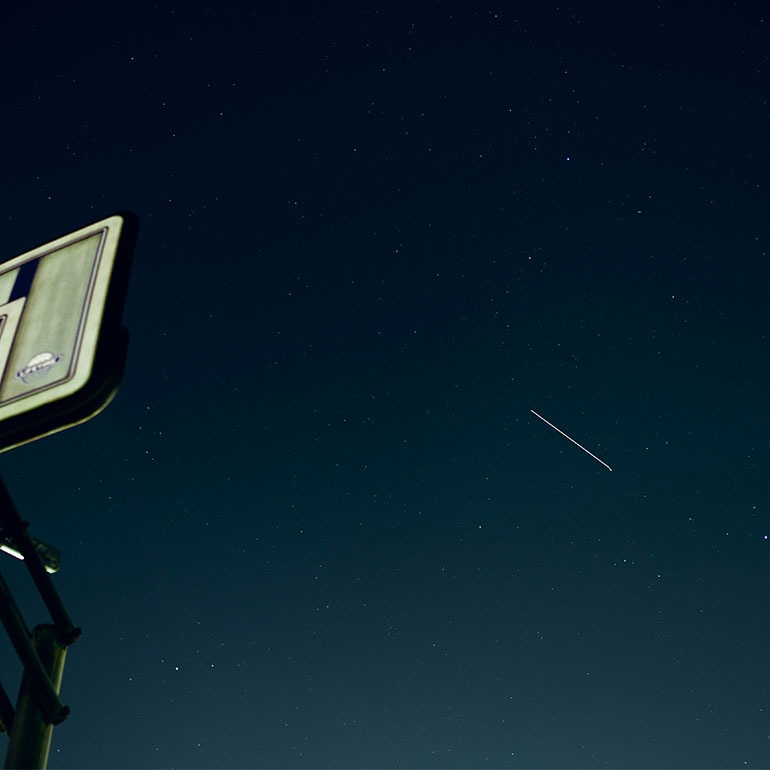
Dr Kat Ross remembers being a child, gazing at the night sky and watching the International Space Station fly overhead.
“I loved seeing the bright dot moving across the sky, knowing that there were humans in there,” Kat says. “And I loved knowing that human innovation and engineering got us there.”
This curiosity lit a fuse in the young Kat, eventually leading her to a PhD researching twinkling distant black holes.
Instead of baby black holes, Kat found many were frustrated teens masquerading as babies. The adolescent black holes were confined by dense clouds of gas and dust, preventing them from growing.
Now, Kat is working with AusSRC, supporting the science and helping with the SKA project.
Working on a global project that will revolutionise astronomy
Kat works with data from the Murchison Widefield Array (MWA) radio telescope.
A precursor instrument to the SKA project, the MWA is located at Inyarrimanha Ilgari Bundara, the CSIRO Murchison Radio-astronomy Observatory in the heart of Wajarri Yamaji Country in remote Western Australia.
“My work involves everything from conducting my own research into baby black holes and imaging the Southern sky in radio colour, to helping new projects develop and start new data processing pipelines on new supercomputing facilities.”
“The work we’re doing now to develop strategies for calibration and assessing the quality of the observations will help us with the SKA.
“It’s an incredible global project, and will completely revolutionise astronomy.”
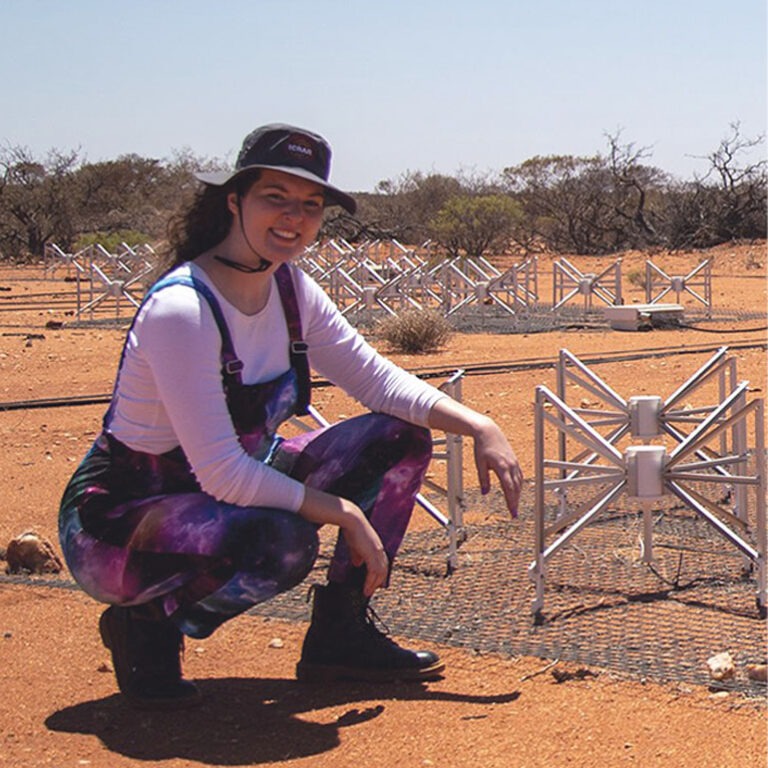
Dr Kat works with data from the Murchison Widefield Array (MWA) radio telescope, a precursor instrument to the SKA project.
Image credit: Cass Rowles.
Why role models are important
When she was growing up, Kat had few role models, although she admired Star Trek Voyager’s Captain Kathryn Janeway.
“I loved seeing a woman (with the same name as me!) be in charge and unapologetically a scientist,” Kat says.
While working in physics education research in New South Wales, Kat noticed an absence of role models in the new physics syllabus.
Students were learning about radioactivity, but Marie Curie wasn’t mentioned. This is odd, because Curie discovered radioactivity, and is the only person to win a Nobel Prize in two scientific fields.
Kat led research into representation in Australian senior secondary science courses, finding Rosalind Franklin the only female scientist mentioned.
Kat says teaching students that science is, and has always been, done by a “lone-white-male-genius” gives an inaccurate and actively exclusionary perspective of a career in science.
“As someone who has never felt like I fit that mould, I’ve been passionate about changing that narrative ever since,” Kat says.
Fighting to IncludeHer
Kat started IncludeHer to help bring role models into Australian classrooms. At the movement’s heart is unpacking and dismantling the narratives that schools have been handing down for generations.
“That includes talking about the women who have contributed to science and been excluded from history. But it also means understanding the structures excluding anyone who doesn’t fit the mould of a scientist.”
Part of this work involves creating resources for educators and the broader public to use in the classroom and sharing with the community. Working together with educators and education departments, the team aims to help produce the best possible science curriculum for all students.
“The fear of getting it wrong can stop a lot of institutes and individuals from doing anything.
“We need people to stand up and take action.”
Science is about bringing together new ideas and trying to understand our world, Kat says. “It’s bad science to keep using the current system and expecting different results when we know it isn’t working.”
Including women at the continued exclusion of other minorities also isn’t a solution. “We place Western science on a pedestal while we ignore and lose Indigenous science,” she says.
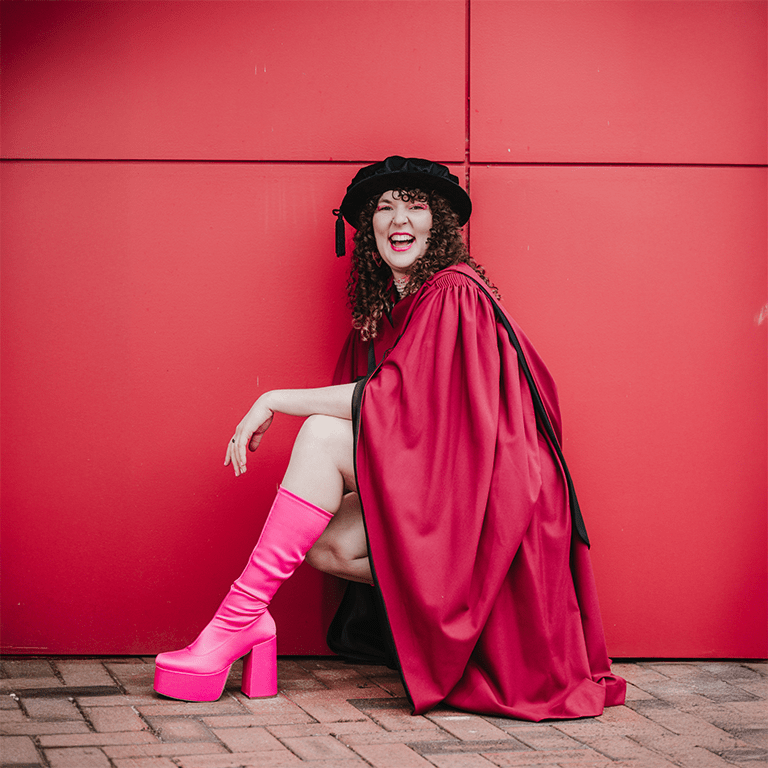
Photo credit: Cobo Photography
Breaking the 'astronomer' mould
Countless studies show the value of relatable role models for all students, and that access to them at all levels of scientific study helps students see themselves at each stage of their careers.
“Reducing the mental load of feeling like they must constantly justify their presence means students spend more energy on their studies and research,” Kat says.
“I love my research and observing the weird things about the Universe,” Kat says. “But I’ve also really enjoyed expanding my hobbies outside of my research.”
“I’m sad about the years I felt like I couldn’t be myself… While trying to fit in, I started losing what was me underneath the mask.”
The International Day of Women and Girls in Science is an annual observance adopted by the United Nations General Assembly to promote full and equal access in Science, Technology, Engineering and Mathematics (STEM) fields. Find out more about the day via the official website womeninscienceday.org.
Learn more about Dr Kat Ross, her work and research, and the IncludeHer movement at astrokatross.com.

Jay Chesters
get your guide to the stars
The 2025 Astronomy Australia Almanac has everything you need to know for a year of stargazing, imcluding month by month descriptions of what to see when.