

What is a light-day? Stargazing and astronomy terms explained

With recent news that NASA’s Voyager 1 spacecraft reached one light-day from Earth, people have been asking us, “What is a light-day?”

It’s true that enjoying the starry southern sky, and all it brings, can sometimes be hampered by the more complex language of stargazing. That’s why we’ve put together this little glossary: a short guide to a few of the most frequently asked astronomy and stargazing terms, words, and phrases you might see or hear.

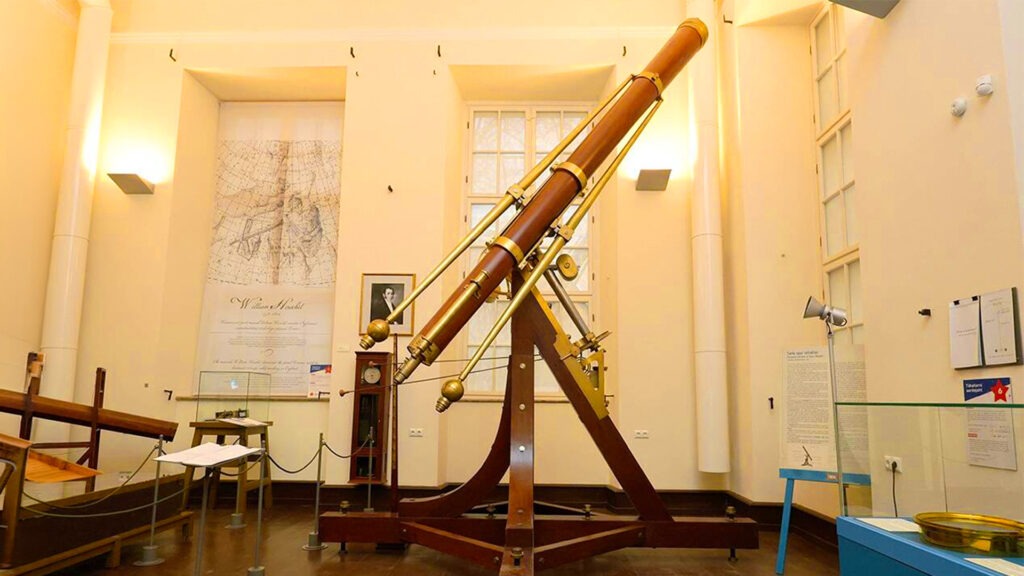
The Fraunhofer refractor of 1824 as an aperture of 24.4cm. Aperture is an astronomy term referring to the diameter of a telescope's lens or mirror.
The Fraunhofer refractor telescope of 1824 has an aperture of 24.4cm

Aperture

Telescopes use mirrors or lenses to collect light. Your telescope’s aperture is the diameter of its lens or mirror. A larger aperture collects more light, meaning sharper images and helping you see more distant objects.

Circumpolar

If a constellation (or another celestial object, like a star) is circumpolar, it always appears above the horizon, year-round. For example, in Australia, the Carina constellation is circumpolar.

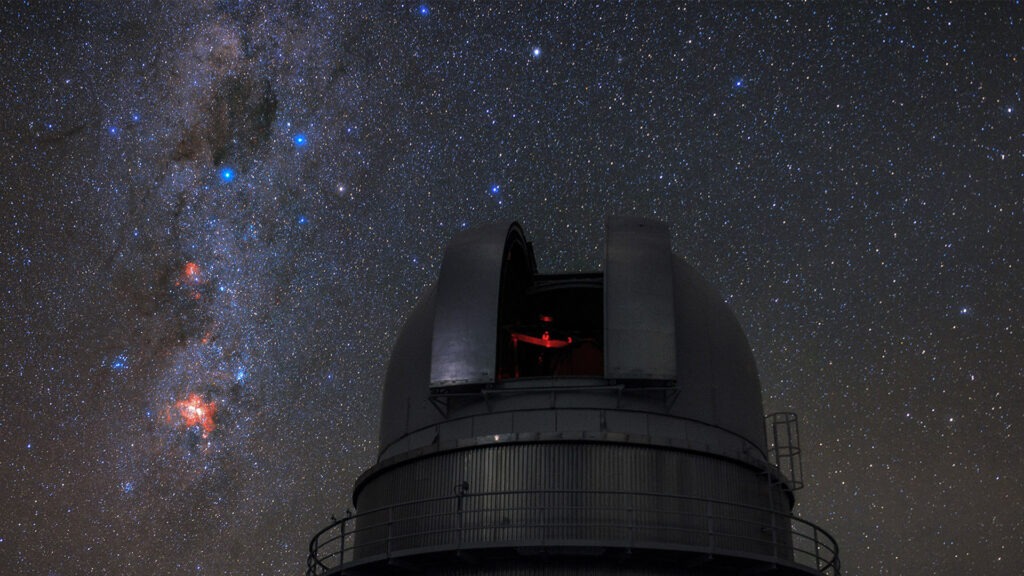
A telescope dome against a starry night sky, with bright stars and nebulae visible in the background.
The Danish 1.54-metre telescope admires the Southern Cross asterism in the constellation of Crux (The Cross). Image credit: ESO/B. Tafreshi

Constellations

Constellations are a group of visible stars that form a perceived pattern or outline, typically representing an animal, mythological subject, or inanimate object. They differ from asterisms because constellations are formally defined by the International Astronomical Union (IAU), and have official boundaries. 

Asterism

Frequently confused with constellations, asterisms are observed patterns made by of stars appearing that appear close together, but asterisms they don’t have the an official IAU designation as a constellation.

For example, Crux is a constellation, and it contains the Southern Cross, which is an asterism.

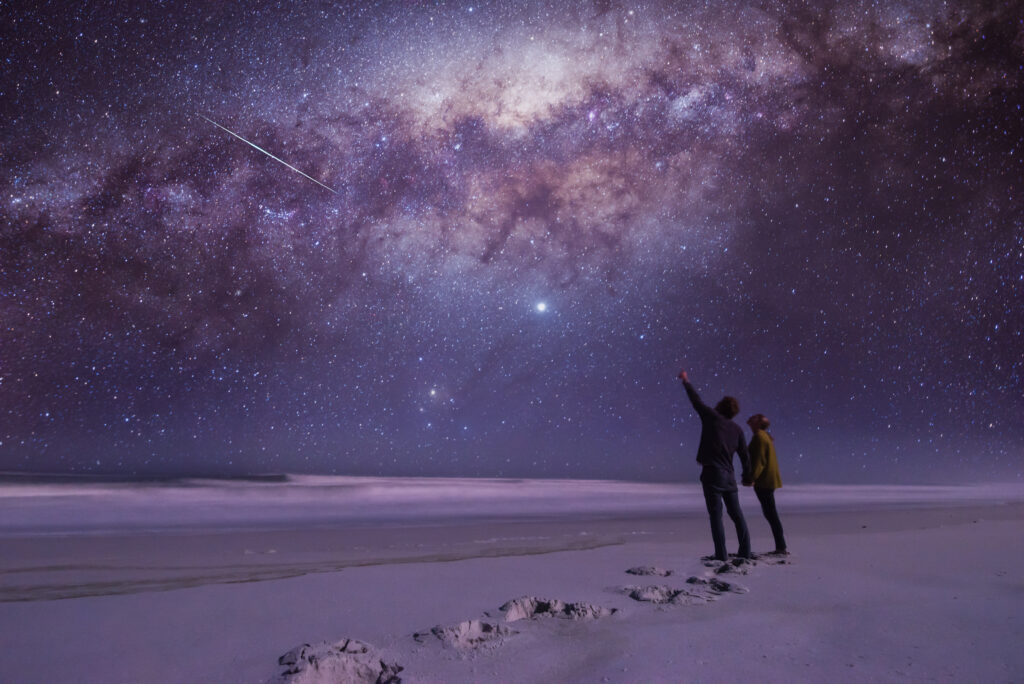
In astronomy terms, shooting star is often a comet or a meteor.

Conjunction

A conjunction is when two or more celestial objects in the sky, when seen from Earth, appear to be in a line. Often, when someone says ‘conjunction’ they’re talking about a close approach (called an appulse).

Shooting star

The term shooting star popularly describes an unexpected streak of light seen in our night sky. A shooting star is usually caused by a small piece of an asteroid or comet (called a meteoroid when they burn up in Earth’s atmosphere.)

Magnification

In simple terms, a telescope’s magnification refers to how “zoomed-in” what you’re observing appears to be. If your telescope has 25x magnification, then objects viewed through your telescope will appear 25 times larger than with the unaided eye.

When you’re new to stargazing, it can be easy to think more magnification must be better, but you’ll find that a lower magnification makes finding your targets easier and gives you a clearer view.
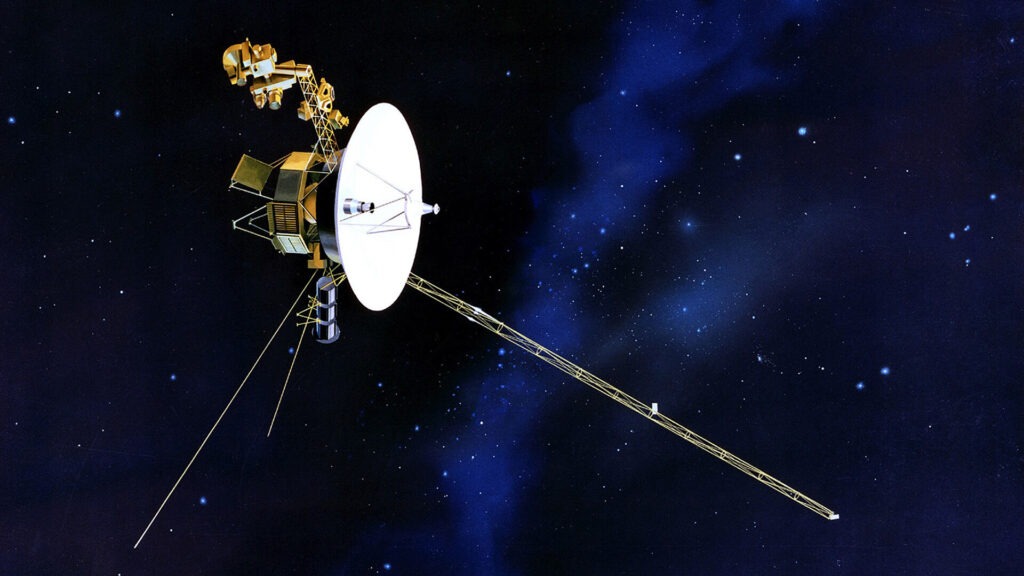
An artist concept of NASA Voyager spacecraft with its antenna pointing to Earth.
Artist’s concept of a NASA Voyager probe, which reached 1 light-day from Earth in November 2026. Image credit: NASA/JPL

Light-year (and light-day)

The speed of light is an exhausting 300,000 kilometres per second. A light year (light-year or ly) is the distance light travels in one [Earth] year, which is about 9.46 trillion kilometres.

The Voyager 1 spacecraft, which has been travelling for nearly 50 years, recently reached one light-day from Earth. It makes sense, then, that a light-day is the distance that light travels in a vacuum in 24 hours.

Voyager 1 has officially become the farthest distance any human-made object has travelled from our home. It will take the spacecraft 118,000 years (minus a few days at time of posting) to reach one light-year.

For context, Andromeda (the closest major galaxy to Earth) is 2.5 million light-years from Earth.

timeanddate.com's Interactive Meteor Shower Sky Map shows the position of the meteor shower's radiant (the circle) in the night sky above Perth.
timeanddate.com's Interactive Meteor Shower Sky Map shows the position of the meteor shower's radiant (the circle) in the sky above Perth.

Radiant

The point in the sky from which meteors appear to originate during a meteor shower (from the perspective of an observer on Earth) is called the radiant, or apparent radiant.

For example, the radiant of May’s Eta-Aquariid meteor shower is near the star Eta-Aquarii in the Aquarius constellation.

Infographic illustrating the impact of light pollution on our ability to see stars and other objects in the night sky. Credit: EFE/NOIRLab/NSF/AURA, P. Marenfeld
The impact of light pollution on our ability to see stars

Artificial light at night

Better known as light pollution, it’s the human-made alteration of outdoor light levels from natural levels.

Dark night skies are invaluable for stargazing, but artificial light at night makes finding them increasingly difficult. Darkness is important for humans and the natural world.

Read more about why darkness is important and what you can do to help preserve it.

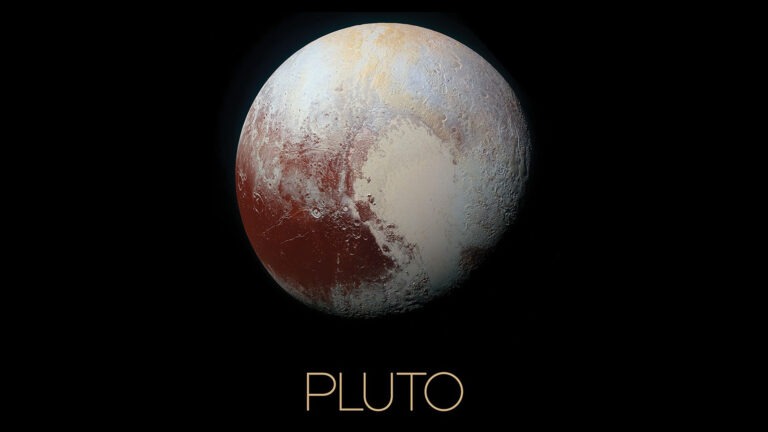
An enhanced colour image of dwarf planet Pluto. Its surface shows a mix of light and dark regions with icy and rocky textures.
The IAU reclassified Pluto as a dwarf planet in 2006.

Dwarf planet

According to the IAU, dwarf planets orbit their host star and are nearly round, but haven’t cleared their orbit of debris. Pluto’s moon Charon has about half Pluto’s mass, forming a binary system with Pluto, where the centre of mass lies outside both objects.

This is why Pluto is not a planet: it hasn’t cleared its orbit. If Pluto were a planet, Charon would be too, and possibly several other dwarf planets.

Illustration of the phases of the Moon
Put simply, a waxing moon is getting bigger and a waning moon is getting smaller.

Waxing, waning, gibbous and 'super' moons

Knowing the Moon’s phase helps when you plan to go stargazing. In a nutshell, a waxing moon is getting bigger (from the new moon to the full moon) and a waning moon is getting smaller. A gibbous moon is more than half-full.

What about a supermoon? Supermoon isn’t an astronomy term, upermoon isn’t an astronomy term; an astrologer coined the name in the 1970s, so different websites have opinions for what does or doesn’t count as a supermoon. Most agree it’s the full moon when the Moon is closest to the Earth.

The difference in apparent size between a micromoon (a full moon when the Moon is furthest from Earth) and a supermoon is barely noticeable through a telescope.

Are we missing a stargazing term you want to understand better? Check out our Stargazing FAQs or drop us a line​ and tell us!

Jay Chesters

Jay Chesters

Jay Chesters is an award-winning wordsmith and science communicator with a little bit of a thing for the stars.

A cosmic storyteller with a love for astronomy and space that's out of this world, Jay’s always eager to share his knowledge and passions.

See stars with a stargazers club membership

Gold Galaxy membership gives you entry to all 12 Stargazers Club WA events through the year, and so much more.

Stargazers Club WA and Astrotourism WA acknowledge and pay tribute to the Traditional Custodians of Country throughout Western Australia. We recognise Aboriginal and Torres Strait people as the world's first astronomers and their continuing connection to lands, sky, waters and communities. We offer our respect to them, their cultures, and to Elders both past and present.