How many dwarfs can you name?
Not Sleepy, Dopey, and their five friends, but the five dwarf planets in our solar system.
Pluto’s exclusion from the solar system’s planets is arguably the biggest controversy in modern astronomy.
For centuries, we’ve described planets according to the ancient Greek word planḗtai, meaning ‘wanderer’. It separated ‘wandering stars’ (planets) from the observed fixed stars. This definition worked fine when there were only six planets.
In August 2006, the International Astronomical Union (IAU) announced that Pluto was no longer a planet.
To say not everyone is happy is an understatement. But most people agreed we needed more than subjective decisions for what made something a planet, rather than a comet or asteroid.
Our Crowded Cosmos
Back in the late 19th Century, before we discovered Neptune, we had a different eighth planet.
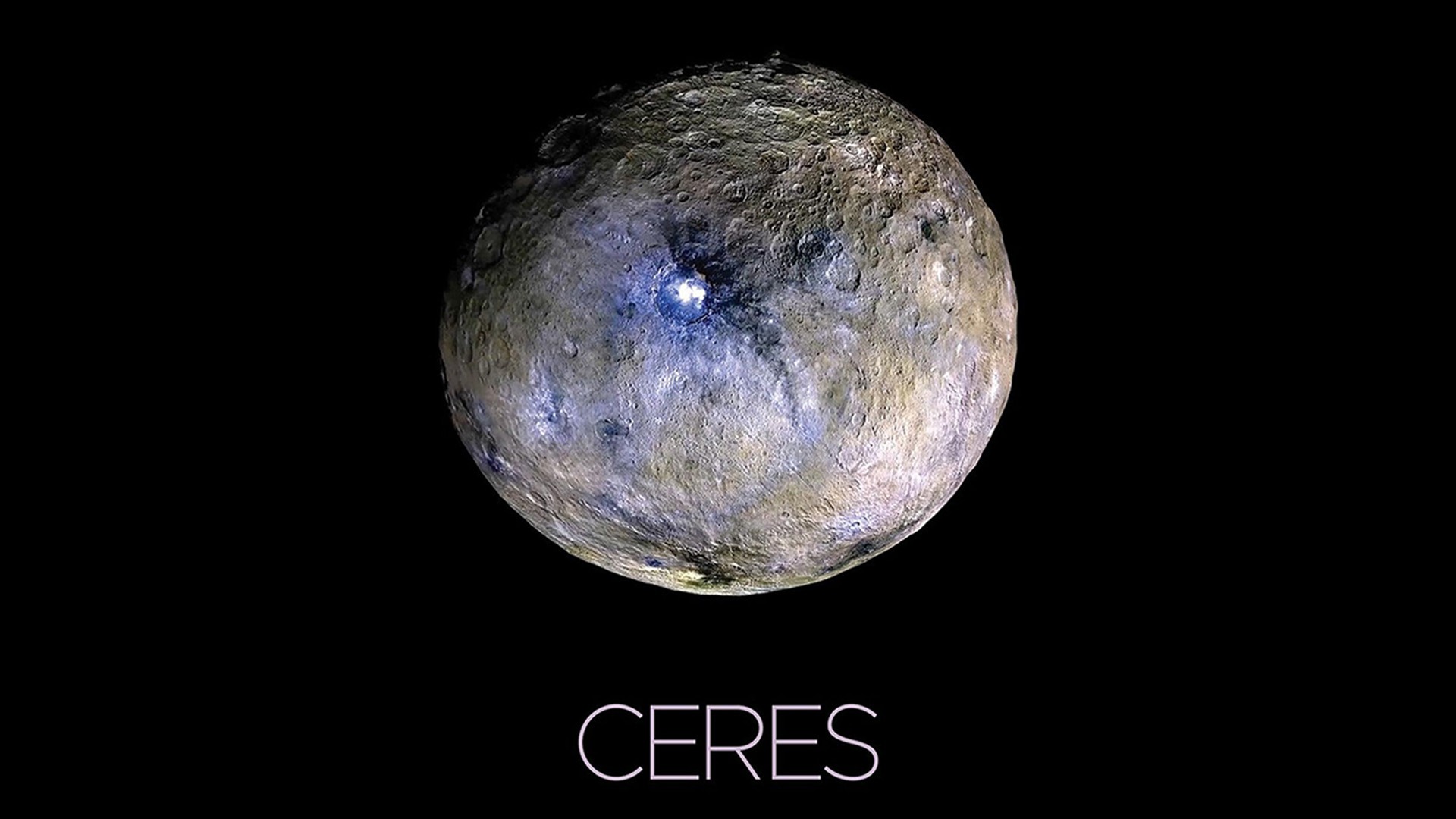
In 1801, an astronomer named Giuseppe Piazzi found what he thought was a star in the asteroid belt between Mars and Jupiter. Piazzi observed it for three days, and realised it was a planet, naming it Ceres.
Half a century later, the solar system was a crowded place. Minor planets Pallas, Juno, and Vesta joined Ceres. Depending on who you asked, it included Astraea, Hebe, Iris, Flora, Metis, Hygiea, Parthenope, Victoria, Egeria, Irene, and Eunomia. If nothing else, remembering their order with a mnemonic was a mouthful.
Astronomers eventually said the newcomers weren’t planets. Instead, they mostly adopted for them William Herschel’s term: asteroids.
Why is Pluto not a planet?
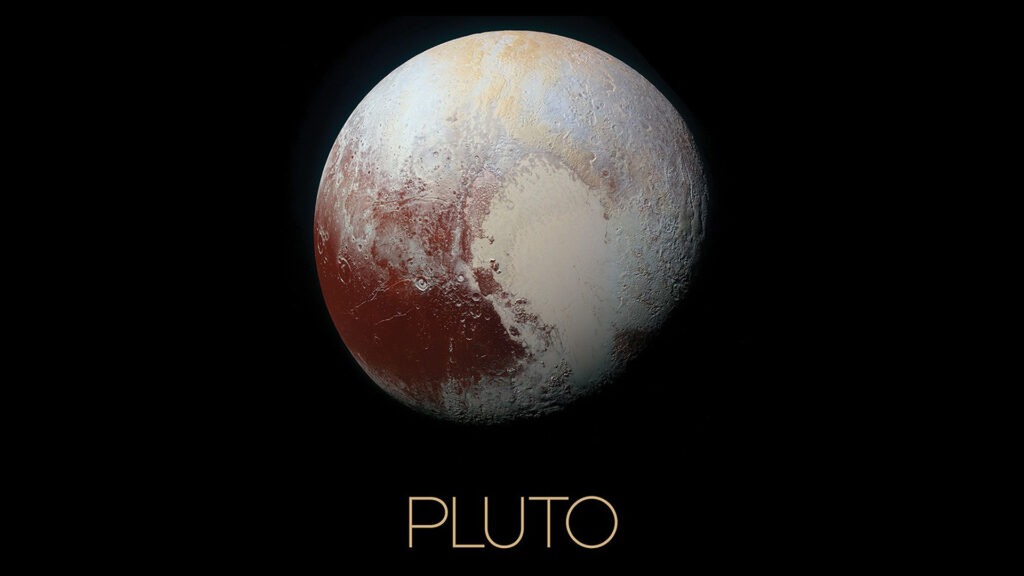
Pluto’s downfall started in the 1990s, when astronomers discovered large, asteroid-like objects more distant than Neptune in the region known as the Kuiper Belt. These are called Trans-Neptunian Objects (TNOs).
There were so many of these Kuiper Belt objects that by 2006, astronomers were finding increasingly more objects comparable to Pluto.
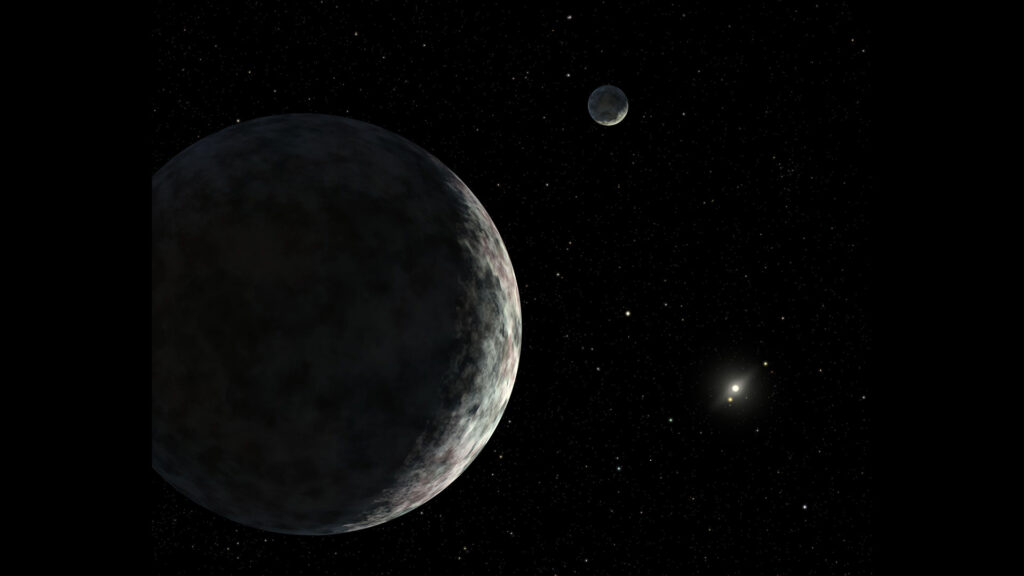
Eris’ discovery sparked so much debate that the astronomers named it after the Greco-Roman goddess of strife and discord.
Roughly the size of Pluto, Eris has almost 30% more mass. If Pluto were a planet, Eris had to be, too. That decision could have reopened the door to more potential planets. Quickly, that would reintroduce the likes of Flora and Eunomia.
What is a Dwarf Planet?
The IAU 2006 General Assembly formally classified a planet as an object that:
a) Orbits its host star (In our solar system that’s the Sun)
b) is mostly round, and
c) os big enough that its gravity cleared away any other objects of similar size near its orbit around the Sun.
Pluto’s moon Charon has about half Pluto’s mass, forming a binary system, where the centre of mass lies outside both objects.
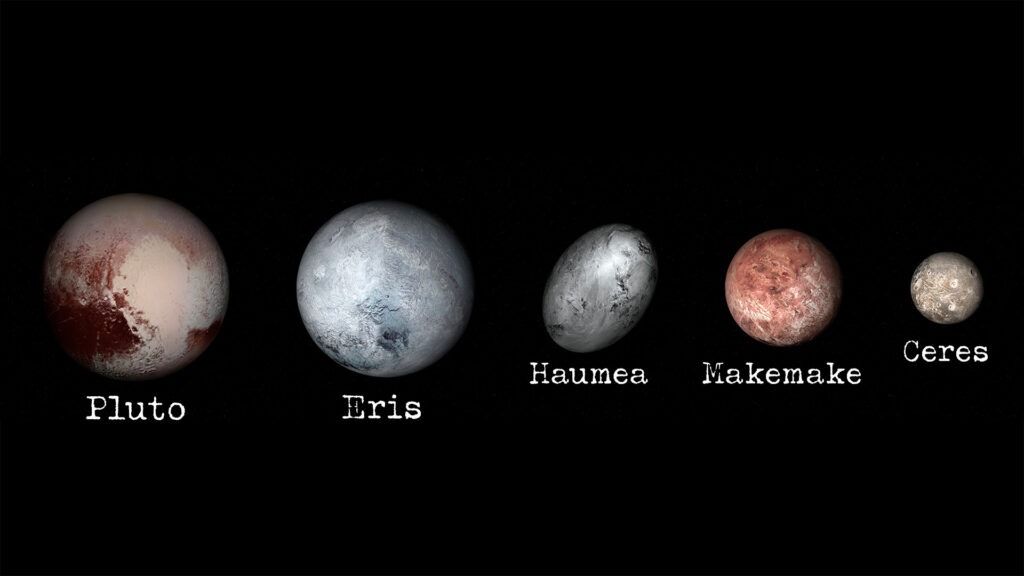
This means neither Pluto or Eris were planets. But, as the IAU took away Pluto’s planet status with one hand, it gave us dwarf planets with the other. Like Pluto, they orbit the Sun, and they’re nearly round, but they haven’t cleared their orbit of debris.
Since then, our Solar System has had only eight official planets. They are: Mercury, Venus, Earth, Mars, Jupiter, Saturn, Uranus, and Neptune.
The quirks of Eris and Ceres
Astronomers once relegated Ceres to asteroid status, but it makes up about 40% of the mass of the asteroid belt. It’s also unlike the other dwarf planets because it’s orbits within the inner solar system.
Eris is particularly unusual, because it’s a Scattered Disk Object (SDO). This means the dwarf planet has a highly elongated and significantly tilted (“highly inclined”) orbit.
Eris’ orbit means its distance from the Sun varies dramatically. It ranges from about 38 AU at its closest to around 97 AU at its farthest, and it’s inclined on a 44-degree angle: much steeper than Pluto’s 17-degrees.
What are the Dwarf Planet's names?
The remaining two dwarf planets officially joining Eris, Pluto, and Ceres are Haumea and Makemake. We’ve had images of them dating back to 1955, but scientists haven’t yet demonstrated the pair are spherical.
IAU guidelines say astronomers must name dwarf planets for a “deity or figure related to creation”. Makemake is the Polynesian Rapa Nui’s creator of humanity and god of fertility, and Haumea is the Hawaiian goddess of childbirth and fertility.
If you know the drama around Haumea’s announcement, it might have been a better choice for naming after strife and discord.
Are there other, unofficial, dwarf planets?
Not everyone in the astronomy community agrees that Pluto isn’t a planet, or that we should use the name dwarf planet at all. Also debatable is the definition of a dwarf planet, and how many dwarf planets there are. Clear, understandable, and consistently applied criteria would be too easy.
With this in mind, Quaoar (discovered 2002), Sedna (2003), Orcus (2004), and Gonggong (2007) unofficially bring the number of dwarf planets to 12.
If that’s still not enough for you, some astronomers would like TNOs Salacia, Máni, Varuna and Ixion also included in the list. Potentially, there could be hundreds of dwarf planets in our solar system.
We’ll let you decide if the IAU’s decision on Pluto has answered the question of what counts a planet.

Jay Chesters
Jay Chesters is an award-winning wordsmith and science communicator with a little bit of a thing for the stars.
A cosmic storyteller with a love for astronomy and space that's out of this world, Jay’s always eager to share his knowledge and passions.
Check out Our Events Calendar
Join us at our next event, and get together with like-minded people who love everything about the night sky.