There’s not a single, agreed-upon definition for what a supermoon is, and the reason for this debate is very simple.
Different websites, news outlets, or social media influencers disagree on what makes a full moon into a supermoon because supermoon isn’t a scientific term. Instead, the name was invented by an astrologer who thought that a supermoon’s extra gravity would cause natural disasters.
In popular science, the simplest supermoon explanation goes like this: the Moon’s orbit around Earth is slightly oval-shaped or elliptical. This means that, every month, there comes a time when the Moon is at its closest point to Earth (its perigee) and another time when it is at its farthest from Earth (its apogee).
A supermoon is when a full moon coincides with the Moon being close to its perigee.
How rare is a supermoon?
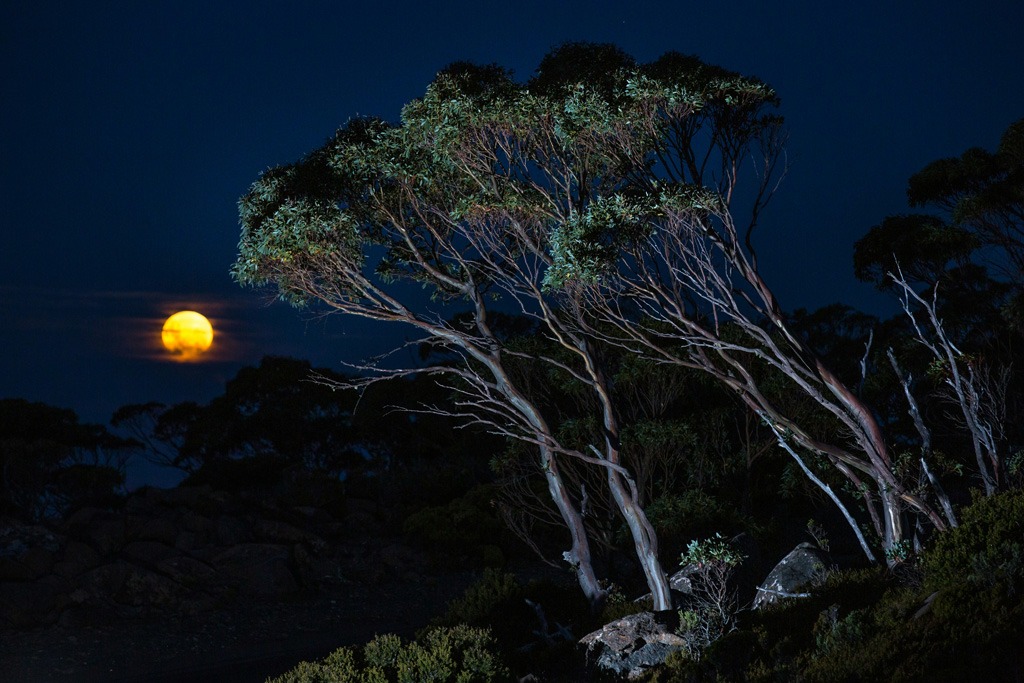
Out of a possible 12 or 13 full moons in any given year, there will be three or more occasions when the Moon happens to be near to its closest point to Earth at the time of a full moon.
The American astrophysicist Fred Espenak developed a precise mathematical formula to help you check if a particular month’s full moon is a supermoon. Saving you the mental labour of working it out, he also published a table listing every supermoon until the year 2100.
Check it out on Espenak’s website, at Full Moon at Perigee (Full Supermoon): 2001 to 2100.
Does a supermoon appear larger to the naked eye?
You probably can’t tell the difference between a supermoon and any other full moon.
This is because the difference in apparent size between when the moon is smallest (a ‘micromoon’ is at its farthest from Earth) and a ‘supermoon’ is only barely noticeable with a telescope, and not detectable to the naked eye. Anyone telling you otherwise is usually trying to make money from you.
Returning again to Fred Espenak, he says:
It has become popular for the media to sensationalize the occurence of each supermoon. Promises are made that a particular Full Moon will be the biggest and brightest of the year “So don’t miss it!”.
While such claims may be technically accurate, can you actually see any difference between a supermoon and an “average Moon”? It’s very unlikely, especially since you can’t compare them side-by-side.
For some comparisons between ‘Super’ and ‘Micro’ moons, check out our handy infographic below, or read more on Fred Espenak’s website, AstroPixels.


What is a supermoon's effect on Earth?
A supermoon has no specific effect on the Earth.
While the Moon’s mass doesn’t change, whether it’s a full moon or something else, average tidal ranges are slightly larger at times of full or new moon.
Since the Moon’s distance from Earth slightly affects its gravitational pull, a full moon at a particularly close approach to Earth can cause what’s called a “Perigean spring tide”.
However, a supermoon (a full moon coinciding with the Moon being close to its perigee) has the same effect on Earth as if it is a new moon, only you can see it more clearly.
Why does the Moon sometimes look much larger?
Sometimes, the Moon does seem much bigger than normal, and there are a few reasons why this can happen.
The simplest answer is that it’s the power of suggestion. If you’re told the Moon is going to be the biggest and brightest of the year, you could convince yourself it’s true.
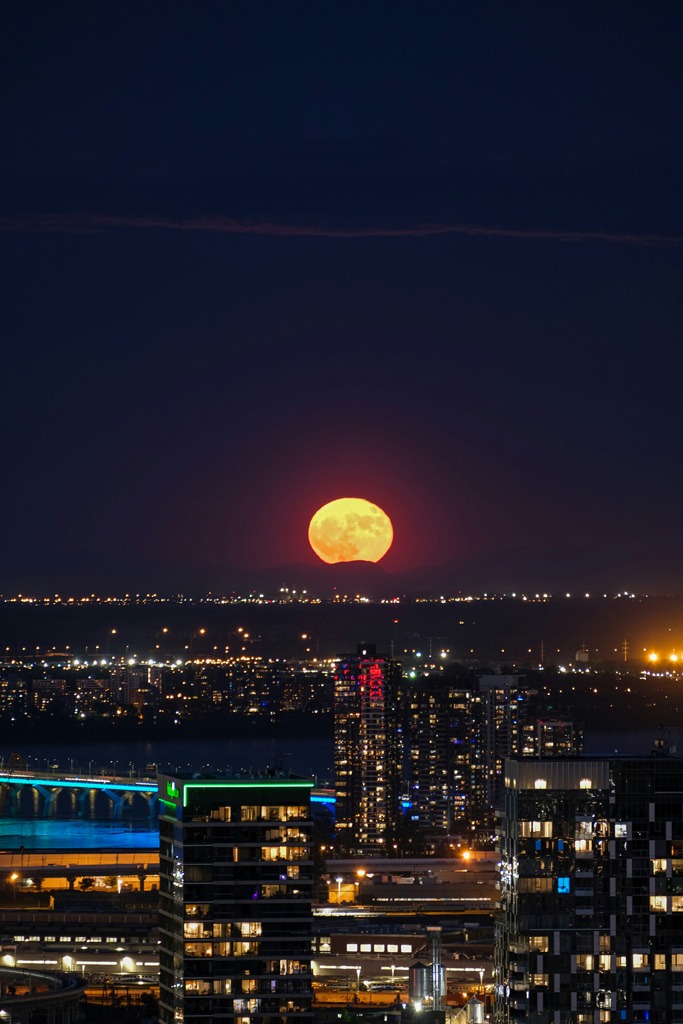
Another reason why the Moon can look larger is that it’s an optical illusion. When the Moon is closer to the horizon, our brains can misinterpret what they’re seeing. When you see those amazing supermoon photos on social media, often the photographer has recreated this optical illusion by shooting with a long zoom and capturing objects like buildings or trees in the frame, making the Moon look huge.
If you’d like to confirm for yourself the size of the Moon doesn’t change on any particular night, you can try this simple experiment NASA suggests in their blog post The Moon Illusion: “Hold up your outstretched index finger next to the Moon. You’ll find that your fingernail and the Moon are about the same size.”
Another way that NASA suggests of checking it for yourself is by taking a photograph when the Moon is near the horizon, and taking another later in the evening when the Moon has climbed higher in the sky.
Keep your all camera settings the same for both photos, including your zoom, and you’ll again find that the Moon stays the same.
When and where to look for the supermoon in 2026
While ‘supermoon’ or ‘micromoon’ aren’t astronomical terms scientists use, these occasions are still a great excuse to get us heading outside with binoculars, cameras, and telescopes to gaze up at the wonderful night sky.
Here are the dates and rising times for upcoming supermoons. Remember, the Moon rises in the east:
- 3 January 2026, 7:41pm (AWST). Moon distance from Earth: 362,312kms
- 24 November 2026, 6:57pm (AWST). Moon distance from Earth: 360,768kms
- 24 December 2026, 7:58pm (AWST). Moon distance from Earth: 356,740kms
Where’s the best place to watch a supermoon rise?
Find a place where you can see the eastern horizon well. Anywhere will be OK as long as you have a reasonably clear view of the eastern horizon, without buildings or trees blocking your view.
If you’d like to try to photograph the supermoon, consider what type of landscape you’d like to capture in the foreground of your image. A group of trees, an interesting building, or perhaps a body of water like a lake or river. Remember, this landscape needs to be in your view as you look east.
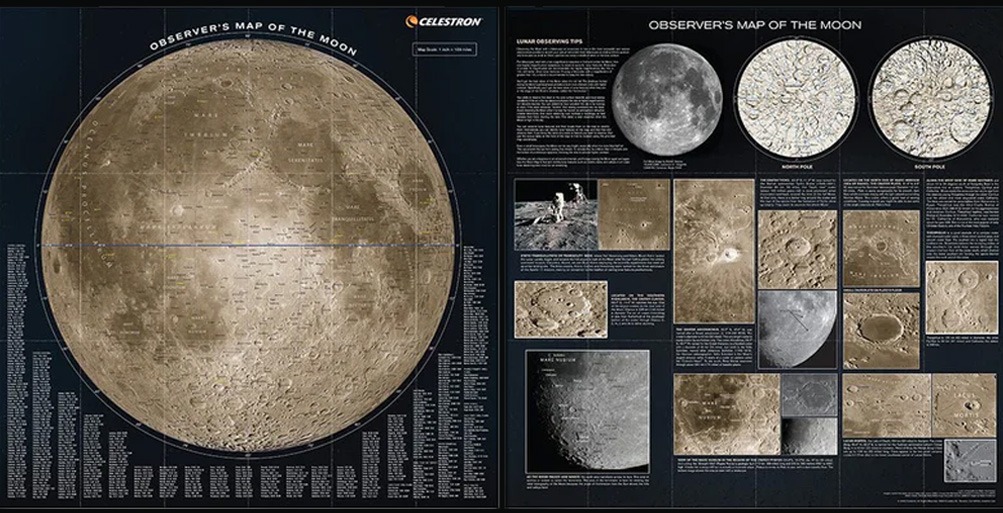
What craters can you see on the Moon?
- Moon Phase and Libration Visualizations (From NASA’s Scientific Visualization Studio. And, yes, the visualisation is for Southern Hemisphere stargazers)
- Moon Globe (for iOS)
- Moon Atlas 3D (for Android)
- LunarMap Lite (for Android)
What makes a supermoon into a cold full supermoon or a super wolf blood moon?
Pop culture has more recently taken lists of what were once seasonal or month names and adopted them as specific names for each month’s full moon.
But even credulously taking these lists at face value, cultural names aren’t astronomical or scientific names, and they only applied to very specific parts of the Northern Hemisphere.
People have been publishing supposed lists of Northern Hemisphere “moon names” for centuries. The earliest recorded were published in 19th-century North America. The Maine Farmers’ Almanac published a list of familiar-sounding moon names in 1937, crediting them to “early English ancestors” for the labels. Then, by the mid-20th century, authors started generically crediting “the Indians” for very similar lists.
More contemporary authors may have created their own lists by taking content from sources like the 1937 almanac, inventing or adding content found elsewhere, and vaguely citing Anglo-Saxon and Celtic folklore, or modern Pagan, New Age, and Wiccan traditions, often without evidence.
Today, such lists with names like “wolf moon” and “beaver moon” are often reported as coming from “Native Americans”, without specifing the tribe or group they’re meant to come from. The names get even more creative when they’re combined with terms like supermoon, blue moon, or blood moon (for a lunar eclipse).
Whether you call it a super wolf blood moon, strawberry moon, or worm moon, the names aren’t scientific, but spark interest and curiosity, and we like encouraging people to get outside and gaze up at the night sky.