December is a fantastic time for stargazers hoping to see Jupiter in the night sky.
Jupiter reaches ‘opposition’ in January: meaning the ‘king’ of the planets will be visible almost all night, and at its largest and brightest. Views of Jupiter are getting better as the year winds down.
Keep reading for how, where, and when you can see Jupiter, as well as a little more about our friendly solar neighbourhood gas giant.
Jupiter: quick facts
We know that Jupiter is the largest of the planets, but how big is it, really? Jupiter is a massive two-and-a-half times the size of all the other planets combined. If we’re talking mass, the king of the planets weighs in at 1898.6 billion trillion metric tons.
According to Universe Today, you could fit almost 1300 Earths inside the gas giant. The planet doesn’t have a solid surface, and scientists are unclear if it even has a solid core.
Jupiter’s earliest appearances
Unlike some other planets, Jupiter wasn’t ‘discovered’. Jupiter is the largest planet in our solar system and the second-brightest, after Venus.
Jupiter is visible to the naked eye, and you can sometimes see it before nightfall, depending on conditions. Humans have observed it since they first gazed up at the skies, and Babylonian records for Jupiter date back to around 800 BCE.
In their work, The Planets in Aboriginal Australia, Duane W. Hamacher and Kirsten Banks describe how “The sun, moon, and visible planets (Mercury, Venus, Mars, Jupiter, and Saturn) were known to Aboriginal and Torres Strait Islander people.”
Aboriginal and Islander people distinguished planets from the background stars and noted their changing positions in the sky, their changing positions relative to each other, their proximity to each other along the zodiac of the ecliptic, and their dynamic relationship to the sun and moon.
Archaeological evidence places Aboriginal people in Australia over 60,000 years before the Babylonian tablets describing Jupiter.
Giving Jupiter a good name
It was only in 1976 that the IAU officially adopted the name Jupiter. However, Jupiter has been the standard, widely accepted name for the planet for centuries in Western astronomy.
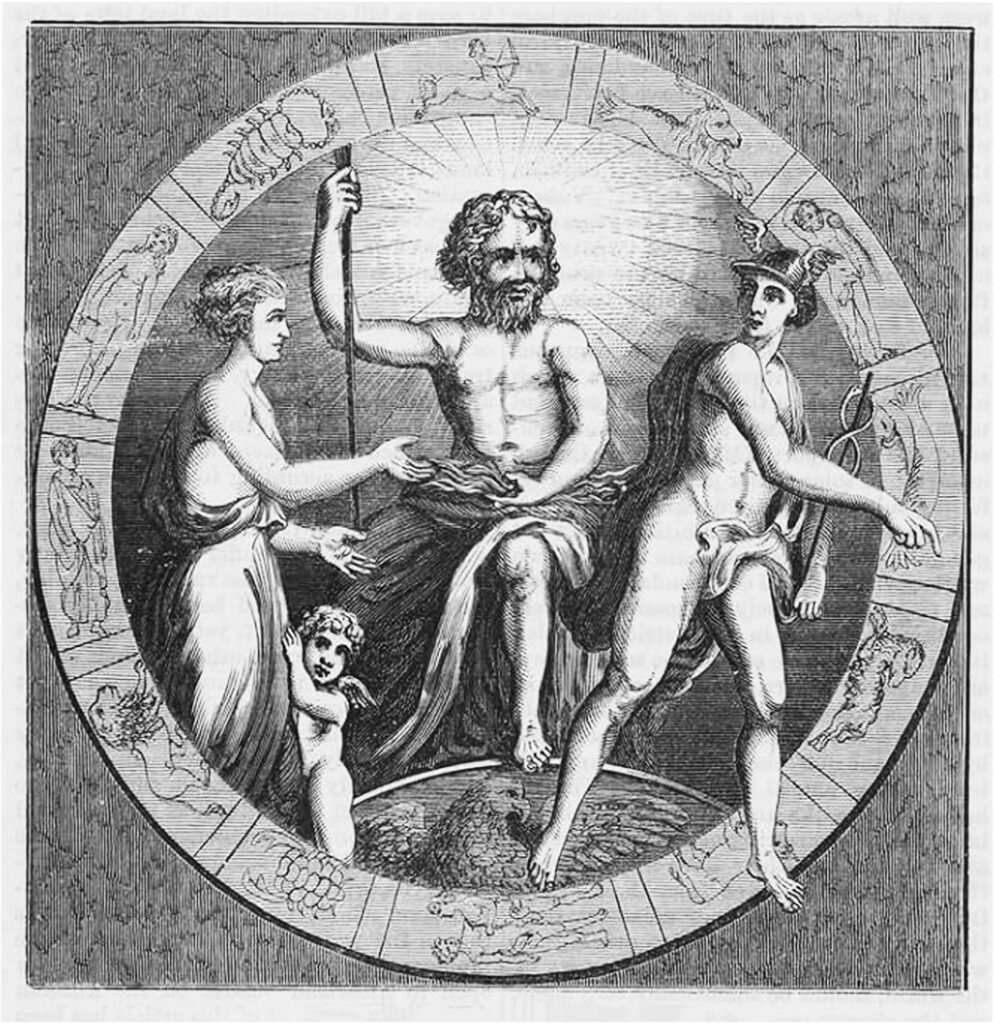
Jupiter (also known as Jove) was the Roman king of the gods and the god of thunder. To the Greeks, this god was Zeus, the Babylonians called it Marduk, and the Sumerians knew it as Enlil.
In Ancient Egyptian culture, Jupiter was called Her-wepes-tawy which means “Horus who illuminates the Two Lands.”
Contrasting with some of the more war-like gods of Roman and Greek mythology, Jupiter is named after Brihaspati in traditional Hindu Vedic astrology, where the god is considered a teacher.
Although English (and many other Germanic languages) call Thursday after Jupiter’s Norse equivalent, Thor, many Romance languages named the day after Jupiter: it’s jueves in Spanish, joi in Romanian, jeudi in French, and giovedì in Italian.
Jupiter's astronomical significance
Jupiter is one of the most significant planets in the history of astronomy. In 1610, Galileo Galilei observed Jupiter through a telescope, and noticed several close stars behaving strangely. Compared to background stars, they seemed to move in the wrong direction. Although these ‘stars’ kept near to Jupiter, they changed their positions relative to one another.
Continued observations over several days helped Galileo realise these stars were really moons orbiting Jupiter. These the first moons discovered orbiting another planet, and they also showed Earth couldn’t be the centre of the universe. Not everything revolved around us!
At last count, Jupiter has at least 97 moons. In honour of Galileo, we call the moons he discovered (Io, Europa, Ganymede, and Callisto) the ‘Galilean satellites’.

Image credit: NASA/JPL-Caltech
Modern missions to Jupiter
NASA’s Pioneer 10 spacecraft left Earth nearly 400 years after Galileo saw Jupiter’s moons for the first time. Pioneer 10 became the first spacecraft to fly beyond Mars and the first to fly past Jupiter.
In 1973 and 1974, Pioneer 10 and 11 measured the gas giant’s radiation belts, magnetic field, interior and atmosphere, taking about 200 images of the gas giant and its moons.
Initially designed for a 21-month mission, Pioneer 10 sent its last signal in 2003, at a distance of about 17.7 billion kilometres from Earth.
Since the 1970s, NASA and the ESA have launched eleven distinct missions to Jupiter, including the JUICE and Europa Clipper missions that are still en route, as well as the six-month-long flybys by the Cassini-Huygens and New Horizons probes.
The list of combined contributions from these missions is a worthy testament to the ingenuity of the people who helped these spacecraft into space. Check out our list of brief highlights in the infographic below.
Read more about Jupiter missions on the ESA website here: A history of Jupiter exploration.

How to see Jupiter rising this December
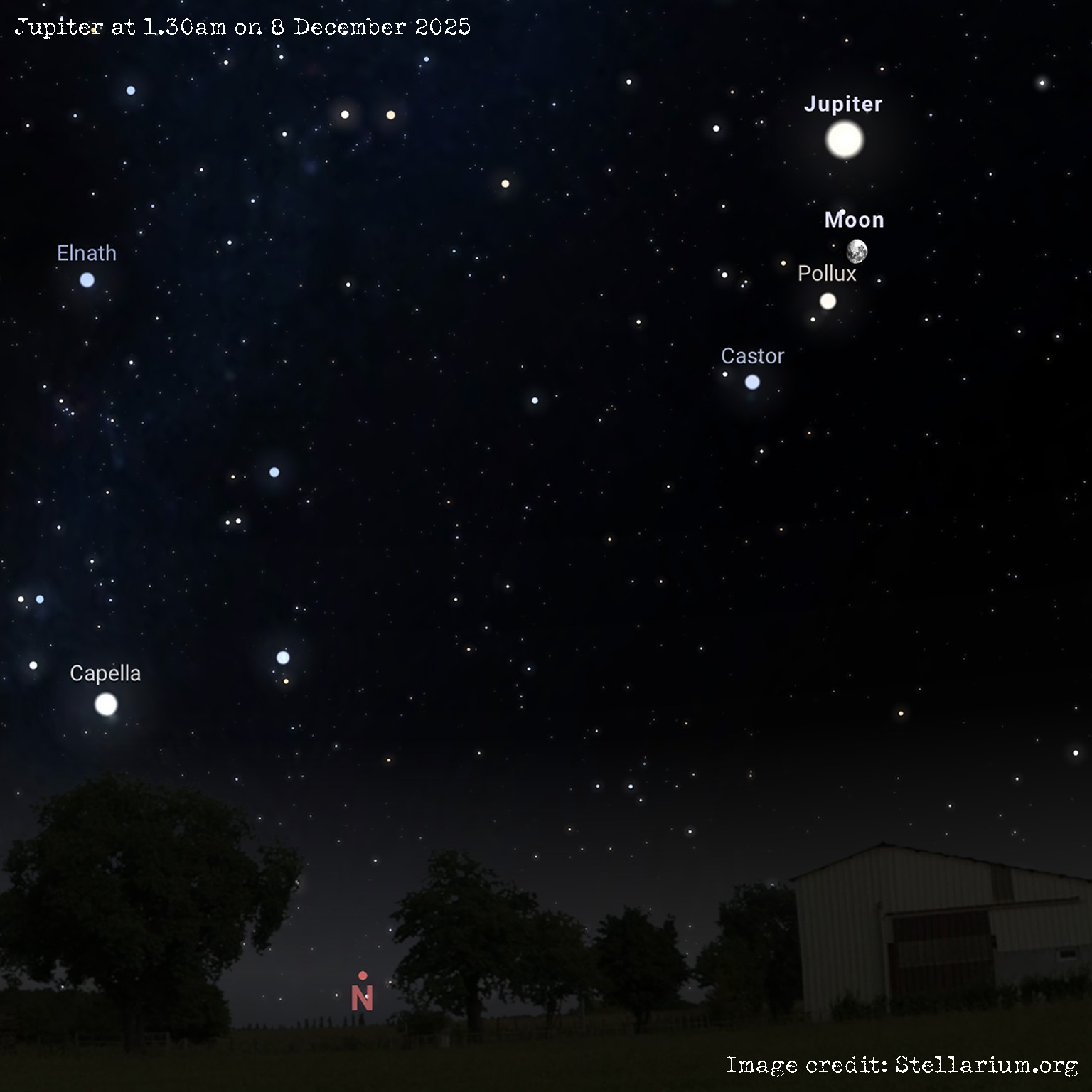
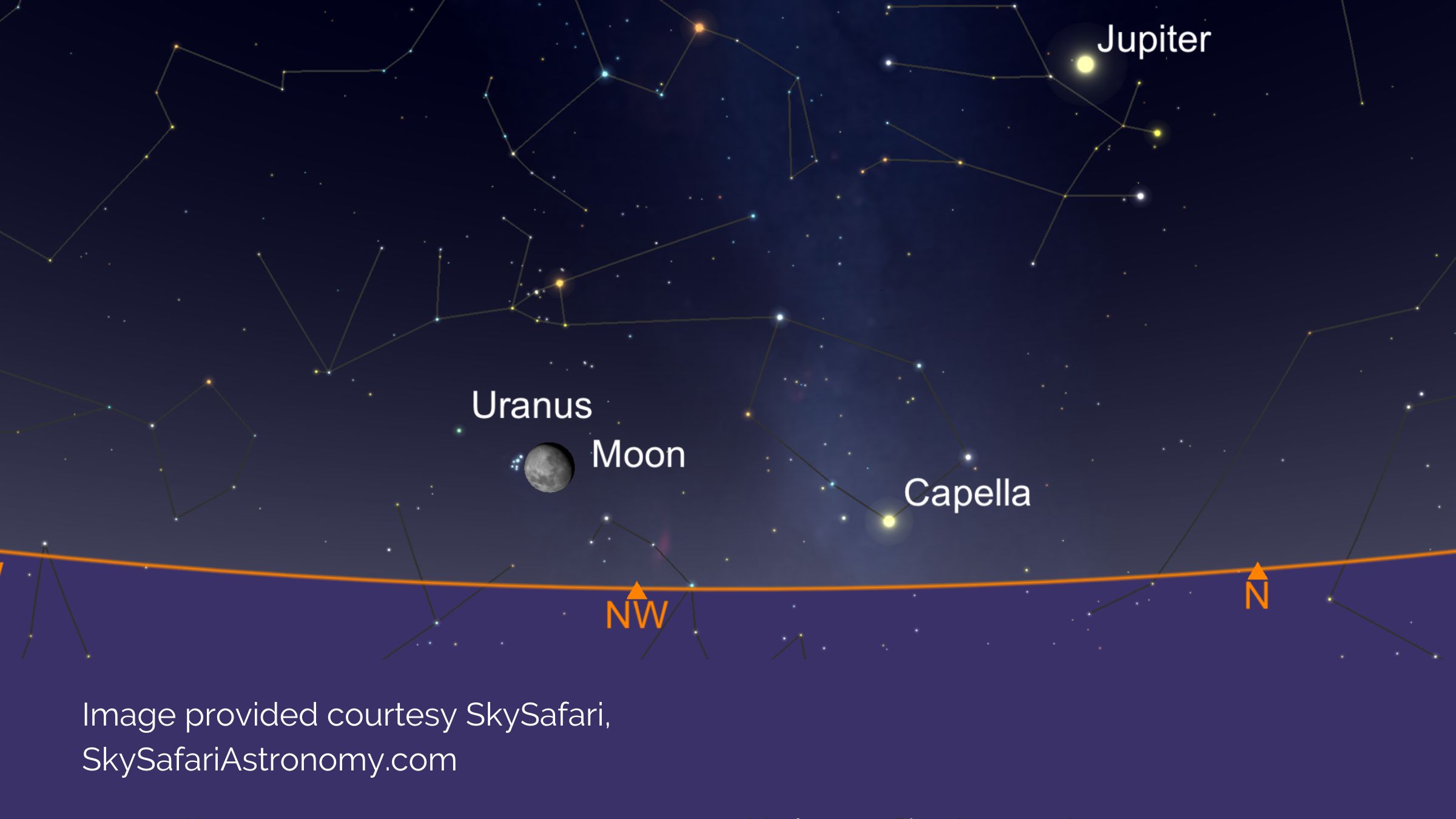
On the night of 1 December, you’ll find the king of the planets above the north-eastern horizon after around 11pm. Jupiter is visible all night, setting a few hours after it’s already lost in the dawn light.
The king of the planets rises steadily earlier throughout the month until New Year’s Eve, when it’s coming up around 8pm, and reaching its highest point about 1.00am on New Year’s Day. Jupiter and the Moon will be visible in the night sky until the Moon sets below the horizon around 1.30am.
And keep watching the skies, because the nearly-full Moon and Jupiter make a close approach on the night of 4 January, reaching their highest point above the northern horizon around 12.30am.

Jay Chesters
Jay Chesters is a wordsmith with a little bit of a thing for the stars. As a cosmic storyteller with a love for astronomy and space that's out of this world, Jay’s always eager to share his knowledge and passions.
Save on Stargazers Club Events
Get a free telescope cheat sheet and save 10% on Stargazers Club WA events.