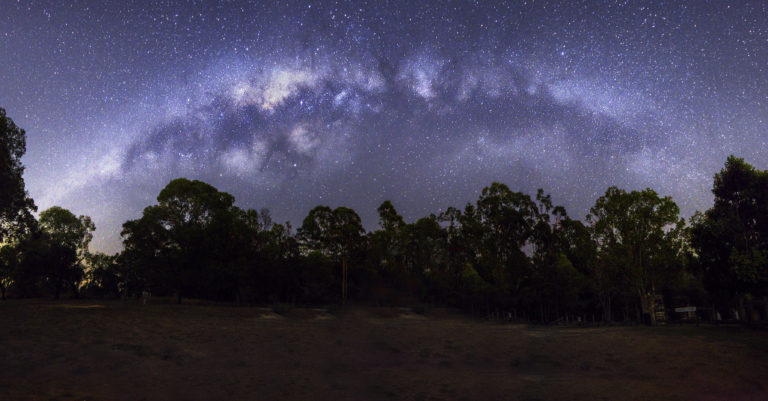
As we prepare to welcome the new year, we’ve collected some of our 2026 stargazing highlights. Read on, and we’ll take you through a few of our top sights throughout the year. From eclipses to meteor showers, there’s something for everyone.

During January and February, keep your telescope trained for Comet C/2024 E1 (Wierzchos).
C/2024 E1 officially reaches its closest point to the Sun (perihelion) on 19 January, but it’s at its brightest a week later on 26 January. This is the goldilocks spot: the comet has been heated up by the Sun, and moved closer to Earth.
But a better time to view the comet is almost a month later. On 17 February, the comet reaches its closest point to the Earth (its perigee), and while it will be slightly dimmer, the comet will be closer to the Earth and significantly higher in the sky.
Around 8pm, look for the comet in the south west near the Sculptor constellation. You’ll need at least a small telescope to see the comet, and keep in mind that it will be fuzzier than stars of the same brightness.
Special mention: Look up on 3 March for a total lunar eclipse. Beginning at 4.45pm, the Moon will start passing through Earth’s shadow. A partially-eclipsed Moon rises over the horizon at 6.45pm, and the total lunar eclipse will last from 7.05pm to 8.03pm. If you’re lucky, you’ll see the Moon turn an eerie reddish colour.
The Moon in May
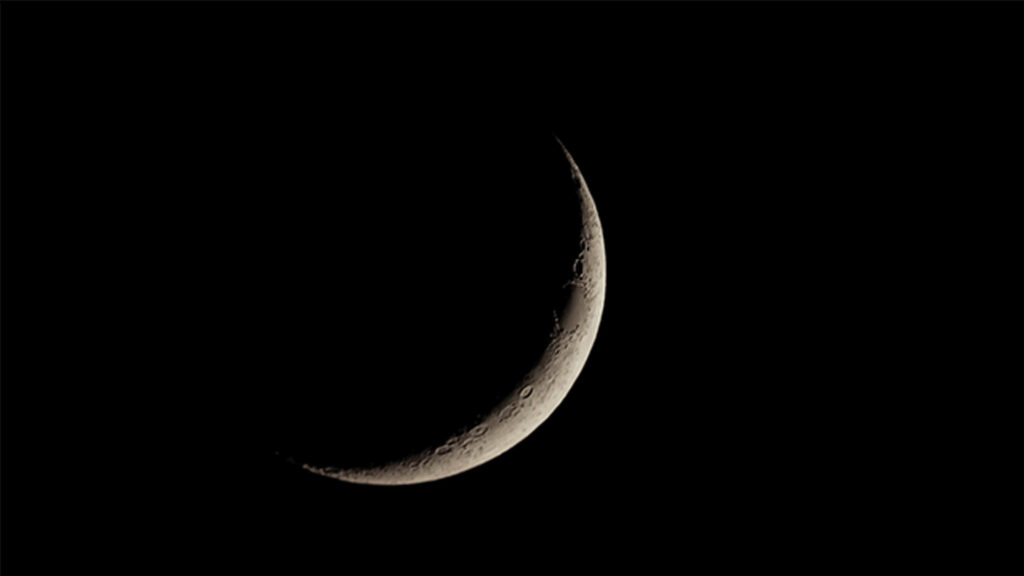
Mid-May is a great month for naked-eye stargazing in 2026, with the planets Venus and Saturn appearing close to the Moon.
Saturn rises in the early hours before dawn on 14 May, and the waning crescent Moon is close behind it, rising at 3.50am. The pair are visible to the naked eye until the Sun comes up at 7am.
Less than a week later, on 19 May, a sliver of a waxing crescent Moon is getting up close to Venus. Wait until the Sun sets at 5.23pm, and look for the Moon in the north-western sky.
Venus disappears under the horizon a little under two hours later, and the Moon sets shortly afterwards at 7.36pm.
April special mention: The Jewel Box open star cluster reaches its highest point around midnight on 5 April. Also known as NGC 4755, the cluster is visible through a small telescope or binoculars, and contains dozens of stars that look like precious, colourful jewels on black velvet. To find these cosmic jewels, first find the Southern Cross (Crux). The Jewel Box is slightly southeast of the bright star Mimosa (Beta Crucis) on the left arm of the ‘cross’.

Set your alarm clock early for the morning of 15 August, because you’ll want to see Mercury and Jupiter together on the north-eastern horizon.
Mercury rises at 6.20am and Jupiter follows two minutes later, with the pair looking like two close, bright stars in the pre-dawn sky.
The Sun comes up at 6.57am, so you’ll have a very short window to spot the planetary pair: and remember never look at the Sun through a telescope or binoculars!
September special mention: September is excellent for viewing Venus in the western sky after sunset. On 14 September, Venus will appear close enough to the Moon to fit within a telescope’s field of view. Come 23 September, Venus will be at its brightest in the early evening sky. Earth’s neighbour will reach magnitude -4.6, compare that to the brightest star in the sky, Sirius, which will be -1.09 mag on the same night.
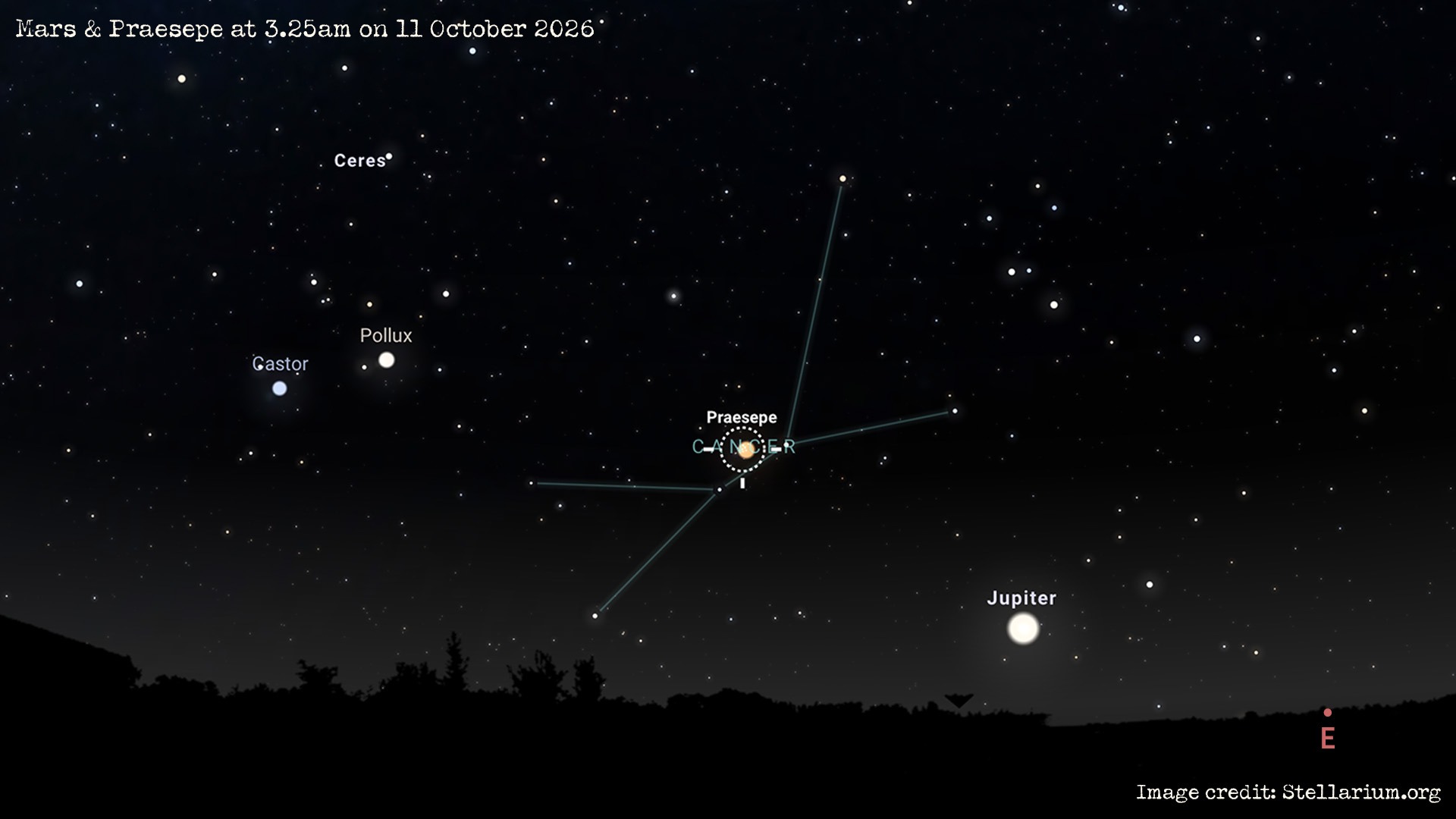
Mars has got some moves in the pre-dawn sky this October, starting with a close approach to the Moon.
On 5 October, the Moon comes up at 2.26am, and Mars follows at 2.40am. In the hours before sunrise, the pair are visible over the north-eastern horizon, until shortly after 5am when the dawn hides them from view.
Then have your binoculars or telescope ready on 11 October. In the early morning hours, Mars appears close to the Beehive open star cluster (also known as Praesepe, or M44) in the constellation of Cancer.
Mars rises at 2.28am, with the Beehive emerging two minutes later. The two stay close enough together in the north-east to be jointly visible through a telescope, until they fading from view with the dawn around 4.45am.
December special mention: 2026 has been miserable for meteors, but the Geminids meteor shower makes up for it. The Geminids peak around 14 December, and coincide with a thin waxing crescent Moon, so the skies will be dark for the occasion.
For shooting stars, the Geminids are quite slow meteors, coming in at only around 35 km/s, but they’re famously bold and bright. This is also one of the most active meteor showers of the year, and under ideal conditions, skywatchers could see as many as 50 meteors an hour.

Jay Chesters
Jay Chesters is a wordsmith with a little bit of a thing for the stars. As a cosmic storyteller with a love for astronomy and space that's out of this world, Jay’s always eager to share his knowledge and passions.
See the best meteor showers in astrotourism towns